Get Full Government Meeting Transcripts, Videos, & Alerts Forever!
Get email alerts on the Harm Reduction topic
No spam. Unsubscribe anytime.
UCSF pharmacy students urge San Francisco to back safe injection sites and opioid public‑health ordinance
Summary
Groups of UCSF pharmacy students and other public commenters told the Health Commission they support a Supervisor‑introduced ordinance (190,984) and state bills enabling supervised safe injection sites, arguing the sites reduce infectious‑disease transmission and provide overdose response and treatment linkages.
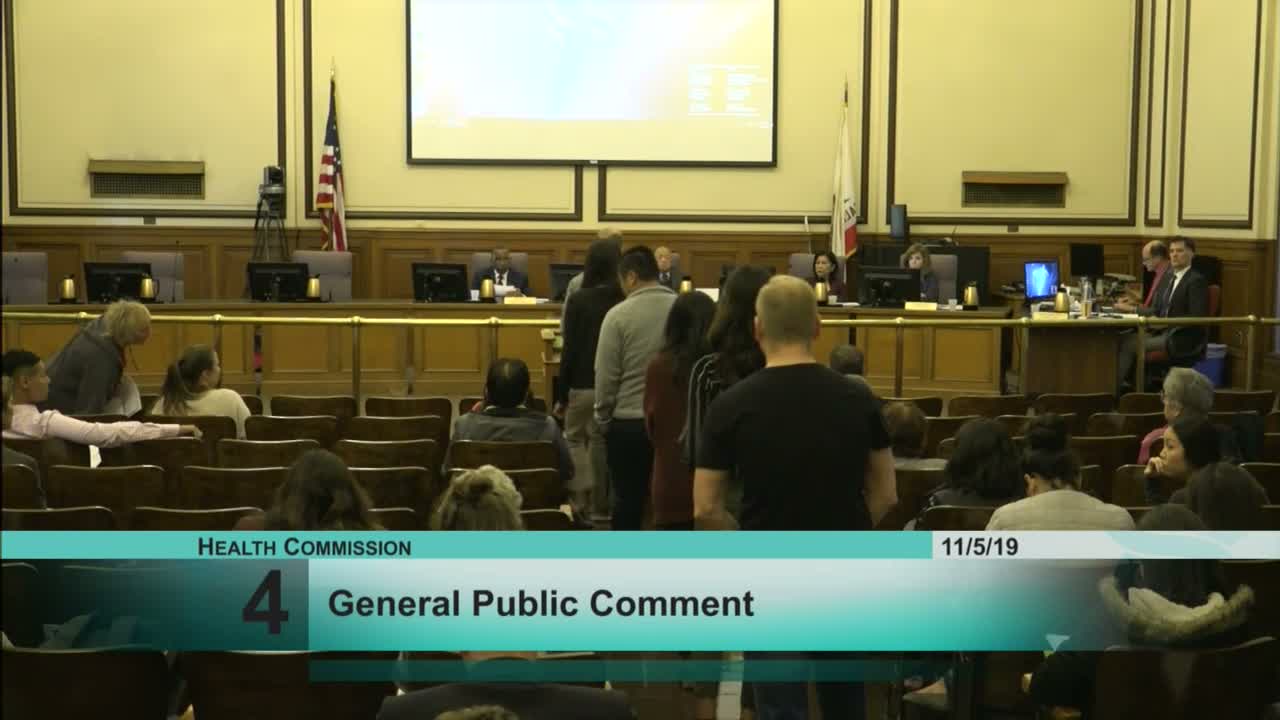
Dozens of student pharmacists and public‑health trainees spoke during the commission’s public‑comment period to urge support for local and state measures to address opioid use and prevent overdose.
Brian Gack and other UCSF pharmacy students asked the commission to support ordinance 190,984 (introduced by Supervisor Haney), a proposal that would ask DPH to treat the opioid crisis as a public‑health emergency and to develop plans for street‑level crisis response, overdose reporting and expanded detox and drop‑in models. "The ordinance asked the department to create a plan that would improve street level crisis response to assist people who are using drugs in psychosis or are experiencing an overdose," the students said.
Multiple students also urged the commission to prepare for implementation of state measures that permit supervised consumption sites (mentioned in the hearing as AB 362/AB 3 62). Carissa Reyes said supervised sites provide sterile supplies, safe disposal and a non‑punitive place for people to use, while Andy Wong added that health‑professional staffing at such sites could reduce stigma and support overdose‑prevention education.
Speakers also connected safe‑site proposals to broader overdose‑prevention work, including naloxone distribution and local task‑force recommendations on methamphetamine responses. Commenters asked the commission and DPH to coordinate quickly with the Board of Supervisors and with community providers should state law change to allow local supervised sites.
The commission acknowledged the public comments; no formal vote on the ordinances or on implementation steps took place at the meeting.