Get Full Government Meeting Transcripts, Videos, & Alerts Forever!
Get email alerts on the Behavioral Health Arff topic
No spam. Unsubscribe anytime.
San Francisco Health Department pauses changes at behavioral health center after repeated citations; community demands beds be reopened
Summary
After years of state citations and staff conflicts at the Adult Residential Facility (ARF) at 887 Potrero, the Department of Public Health placed 41 of 55 licensed ARF beds in suspense; DPH says the pause is temporary while corrective actions are developed, but staff, residents and supervisors urged immediate reopening and management changes.
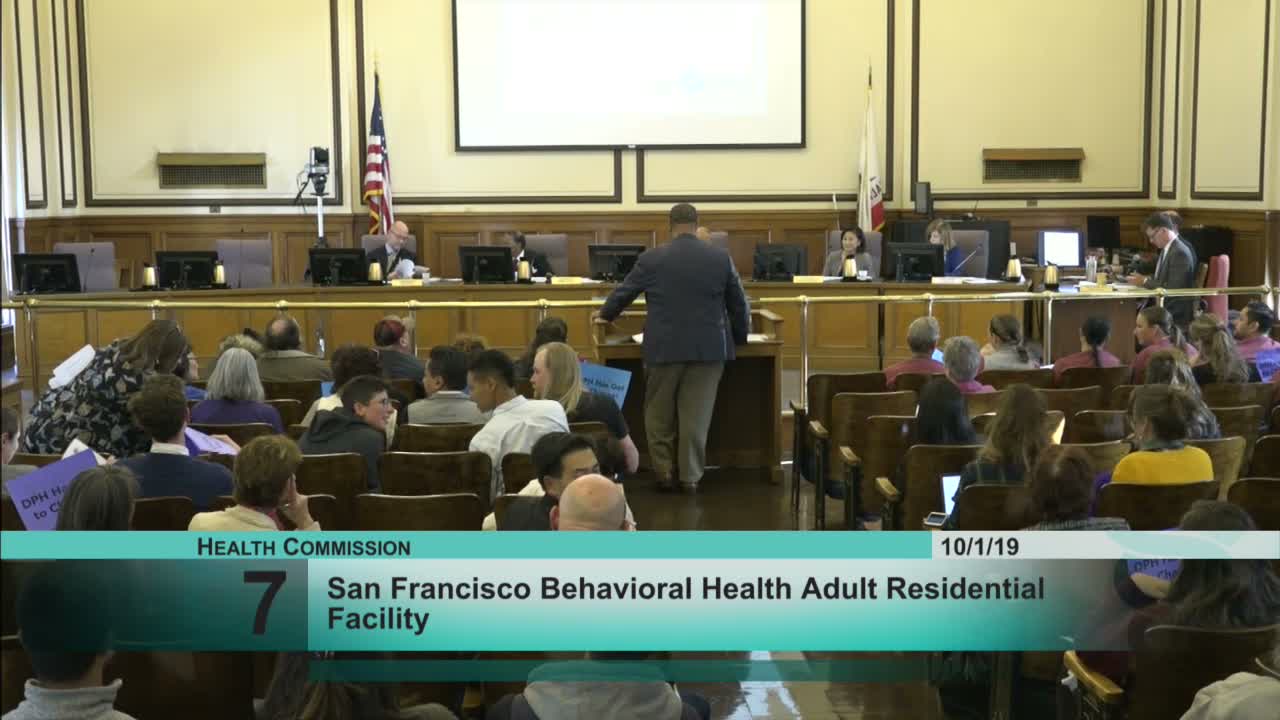
The San Francisco Health Commission on Thursday heard hours of testimony about why dozens of long-term residential mental-health beds at the Behavioral Health Center (BHC) were put in suspense and what should happen next.
Roland Pickens, director of the San Francisco Health Network, told the commission that recurring state regulatory citations and ongoing staff performance and workplace conflicts led DPH to ask the state in May to place 27 ARF beds into suspense, leaving 14 beds operating on the building's first floor. "Because there were vacant unstaffed beds upstairs," Pickens said, the department proposed relocating some residents and staff upstairs so remaining staff could work in a less troubled environment while a root-cause analysis and corrective-action plan proceeded. He said the department is developing a performance-improvement plan that will prioritize resident safety and address workplace culture.
The department described a history of enforcement: Pickens recounted corrective-action efforts dating to a 2014 plan and said the ARF had received multiple citations, including Level A citations, between 2015 and 2018. He told commissioners the suspensions were not intended to remove the license permanently but to allow time to fix the problems and safely re-open beds.
Supervisor Hillary Ronan and many front-line staff and advocates rejected that rationale and called for faster action. Ronan said the city had "kept beds empty purposefully" and urged the commission to open the beds immediately and send HR experts to manage hiring. "We have got to do something to get those beds up and running," she said, adding that she had introduced legislation to force immediate reopening and to deploy Human Resources support.
Front-line staff, residents and clinicians described the human consequences of empty beds. Crystal Tigno, an emergency nurse who read a colleague's letter, said the ED and behavioral-health workforce are "pushed to an unsustainable point" and cited staff trauma and long-term distress. Other speakers described patients waiting in jails or emergency departments for months while residential beds sat empty.
DPH Director of Health Grant Colfax acknowledged communication failures and said the department would do better at stakeholder outreach. "I apologize on the part of the department for not getting input earlier and hearing your concerns," Colfax said. He added that DPH recognized "some severe problems" in operations at the ARF over the past five years, but also affirmed the value of the staff's daily work and committed to collaborate on corrective steps.
Operational numbers presented to the commission showed the situation's complexity: Kelly Hiramoto, manager of special projects, reported that the ARF currently had a census of 32 residents and an overall licensed capacity of 55; the residential care facility for the elderly (RCFE) upstairs had 36 of 59 beds occupied. Pickens said DPH believed it could staff to roughly 41 beds by reallocating floats but would need to hire at least nine additional staff to reach full licensed capacity.
Commissioners pressed DPH on hiring barriers, the timeline for background checks and whether Hummingbird psychiatric respite expansion must come at ARF's expense. Pickens and Hiramoto said HR processes and background clearances can delay nurses' starts; they also said the city is investigating additional Hummingbird sites and that current proposed changes are on hold while the mayor and Board of Supervisors deliberate.
The commission did not take a vote to change DPH's plan during the meeting. Instead, DPH said it would present a corrective-action/performance-improvement plan to Director Colfax and continue coordinating with city leadership. Colfax pledged to follow up with stakeholders and to make resident safety the department's top priority.
What's next: commissioners scheduled follow-up meetings to continue oversight and asked DPH to provide more detailed staffing timelines, citation histories and the corrective-action plan. The department also reiterated that residents retain choice about relocation and that no DPH staff would lose employment as part of the current plan.
Sources: Presentation and Q&A by Roland Pickens and Kelly Hiramoto; director's remarks by Grant Colfax; public testimony from Supervisor Hillary Ronan and multiple staff, residents and union representatives.