Get Full Government Meeting Transcripts, Videos, & Alerts Forever!
Get email alerts on the Transgender Health topic
No spam. Unsubscribe anytime.
Gender Health SF reports 1,000 surgery referrals and early evaluation showing improved quality-of-life measures
Summary
Gender Health SF told the Health Commission it has reached 1,000 surgery referrals and has served roughly 540 unduplicated clients; program evaluation of over 500 unique patients shows statistically significant improvements in psychological well-being and quality-of-life measures, while presenters said rising referrals outpace capacity and wait times for some surgeries persist.
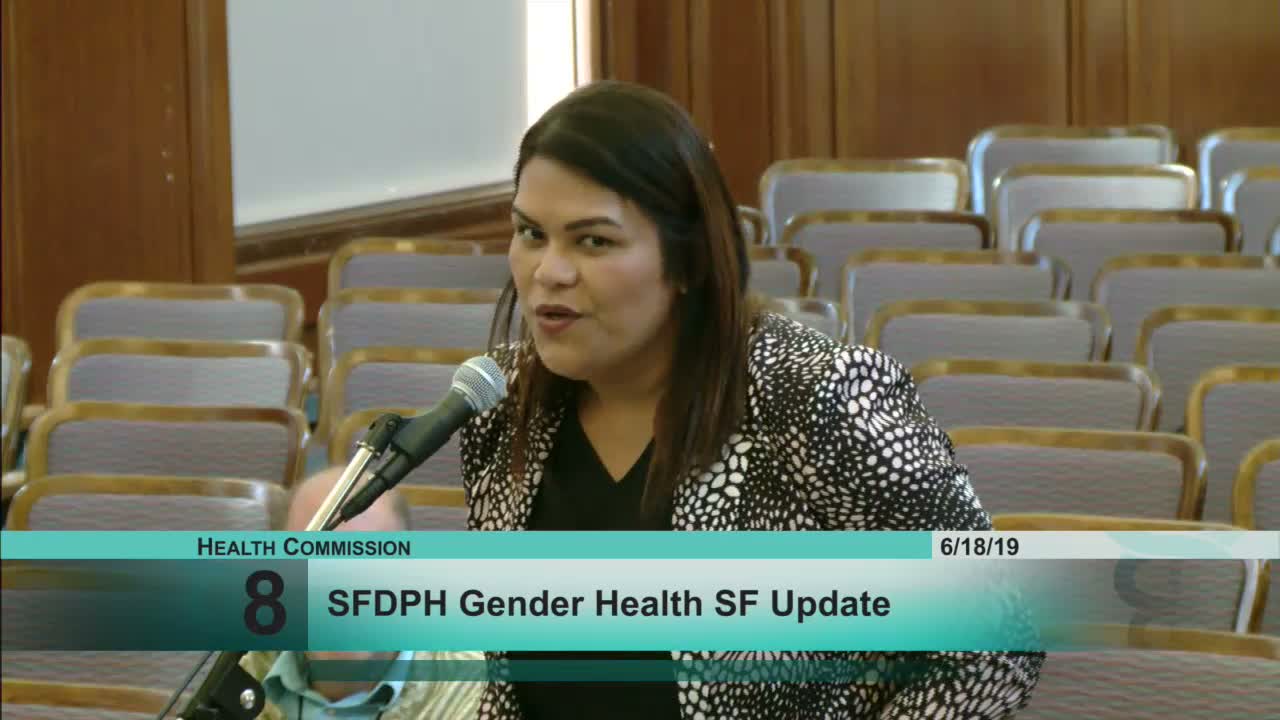
Gender Health SF staff on Tuesday presented program milestones and early evaluation results to the San Francisco Health Commission, saying demand for gender-affirming surgical access has grown faster than the program's capacity.
"We've reached 1,000 surgery referrals," said Jenna Rapuess, program director for Gender Health SF, noting the program began in 2013 to provide navigation, education and referral supports for uninsured or otherwise eligible patients. Rapuess said the program has served about 540 unduplicated clients and emphasized peer navigation, language access and integration with primary care.
Seth Pardo, the program's lead evaluator, summarized evaluation findings from just over 500 unique patients: a majority are trans women, most are people of color aged 25 to 44, about a quarter are unstably housed and many are unemployed or on public assistance. Pardo said referrals have risen steadily while completed surgeries have remained relatively flat, leading to longer wait times for out-of-network procedures such as genital surgeries.
The evaluation reported statistically significant improvements on several measures for patients who participated in program services and post-operative follow-up: reduced body discomfort, lower reported gender dysphoria, and increases in psychological quality of life as measured by the WHO brief scale. Pardo said the program follows patients about six to 12 months post surgery and that the evaluation includes patients whose procedures occur in-network and out-of-network through memoranda of understanding with external surgeons.
Commissioners asked about outcome tracking beyond the program's 12-month follow-up window, housing and recovery planning, and whether primary-care and behavioral-health records could be linked through the city's medical records systems. Panelists said they could provide additional data and noted limitations: the program is not a full intensive case-management hub and some outcome questions would require further work with primary-care records or broader EMR analyses.
Program staff highlighted barriers to scaling services, including limited surgical capacity, competition with trauma cases at the city's trauma center, language-access needs for Spanish-speaking clients and housing instability that complicates postoperative care. They also recognized staff and navigators who came from the community; Rapuess named Karen Aguilar as lead patient navigator and a 2018 Hearts and Heroes award recipient for patient advocacy.
What's next: Commissioners encouraged the program to pursue coordinated data with primary-care and behavioral health records (EPIC) and requested more granular outcome analysis to quantify longer-term impacts on housing, employment and health.