Get Full Government Meeting Transcripts, Videos, & Alerts Forever!
Get email alerts on the State Budget And EHR topic
No spam. Unsubscribe anytime.
Director Colfax highlights state budget health proposals and confirms EPIC go‑live date
Summary
San Francisco Department of Public Health Director Grant Colfax summarized the state May budget revision—s health investments — including pharmacy carve-outs, Covered California subsidies, Medi-Cal expansion for 19–25 year olds, whole-person care funding and a $40 million one‑time public health infectious disease investment — and said the department is on track for an EPIC electronic health record go‑live August 3.
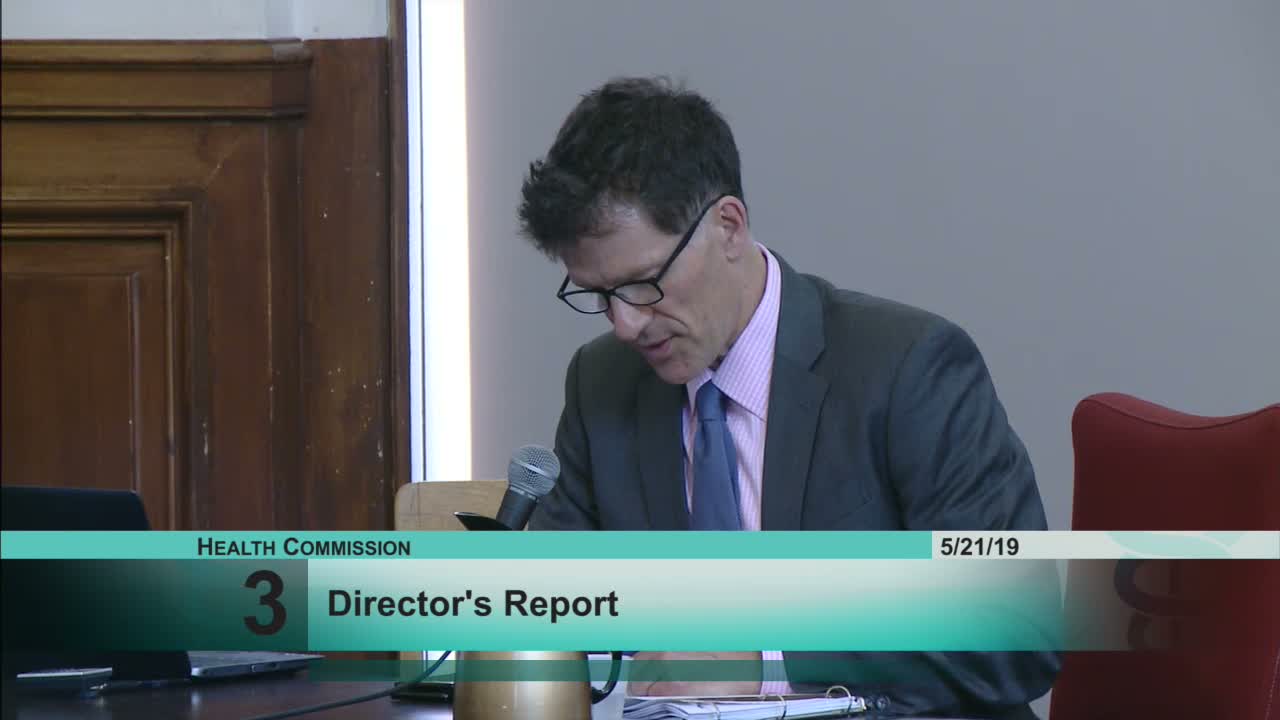
Dr. Grant Colfax delivered the director's report, flagging several health-related items in the state—s May budget revision and local initiatives.
Colfax said the May revision reflects a $213 billion state budget, about $4 billion higher than the January proposal, and retains or expands major healthcare proposals: a pharmacy carve-out, increased subsidies for Covered California, and an expansion of Medi-Cal coverage for young adults ages 19 to 25 regardless of immigration status. She also highlighted investments in whole-person care, workforce development, value-based payments, and interventions aimed at youth substance-use disorders. Colfax called out a one-time $40 million investment to strengthen local public-health infectious-disease infrastructure.
Colfax described a May 16 event at Laguna Honda where the governor joined Mayor London Breed and local officials from Santa Clara and Alameda counties to announce a three-county Bay Area partnership intended to combine purchasing power to lower prescription drug costs.
On digital infrastructure, Colfax said the EPIC electronic health record implementation for the San Francisco Health Network is on track for an August 3 go-live; staff held multi-discipline EPIC workflow walkthroughs attended by more than 1,000 employees to prepare for the transition.
Commissioners asked follow-up questions about which budget increases would most benefit the department locally; Colfax pointed to whole-person care alignment, home visiting and black infant health programs (tied to health equity work), infectious-disease preparedness in light of recent measles activity, and cannabis education and surveillance targeting youth.