Get Full Government Meeting Transcripts, Videos, & Alerts Forever!
Get email alerts on the Homelessness Mortality topic
No spam. Unsubscribe anytime.
City report finds steady homeless deaths from 2016–2018; methamphetamine and alcohol common contributors
Summary
A three‑year medical‑examiner review found 128 homeless deaths in 2016 and 2017 and 134 in 2018 (so far). Toxicology showed methamphetamine in about half of tested cases and opioids in about 45%; presenters urged expanded overdose prevention, treatment pathways and better sheltering to prevent fatalities.
The Health Commission received a three‑year review of deaths among people experiencing homelessness in San Francisco, with presenters urging stepped‑up prevention and alignment between housing and health services.
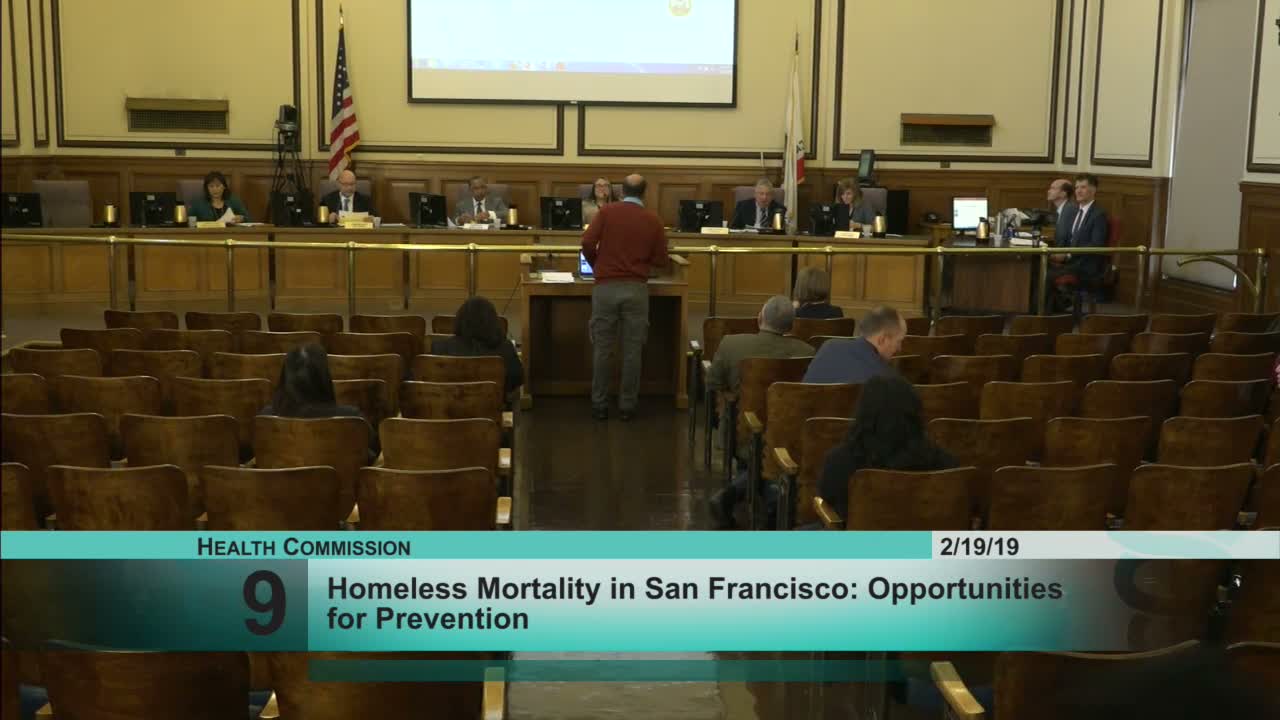
Barry Zevin, medical director of Street Medicine and Shelter Health, summarized methods and key findings from medical‑examiner reports and linked clinical databases. He reported 128 deaths in 2016, 128 in 2017 and 134 so far in 2018 using this methodology. "What this report tells us is about homeless deaths that we've been able to examine after looking very closely at medical examiner reports," Zevin said, noting the study does not measure homelessness‑specific mortality rates or all deaths outside of medical‑examiner cases.
Key findings Zevin highlighted: around 50 percent of manners were accidental (including unintentional overdoses), 11 percent homicides, 30 percent natural causes and 4 percent suicides in medical‑examiner cases. Toxicology showed methamphetamine present in almost 50 percent of tested cases and opioids in about 45 percent; drugs were listed as a contributing factor in 52 percent of cases and alcohol in about a third.
Demographically, 82 percent of identified decedents were male, roughly half were white and about a quarter were African American. More than half were over age 50, reflecting an aging homeless population. Zevin emphasized the data's operational value: weekly medical‑examiner reports enable outreach to locations where deaths occur and help tailor prevention efforts.
Recommendations and next steps in the presentation included strengthening overdose‑prevention work, launching a methamphetamine task force (already announced elsewhere on the agenda), improving continuity of care from sobering centers through detox and treatment into housing, and studying deaths that were not medical‑examiner cases to broaden prevention strategies. A public commenter from the San Francisco Health Care for the Homeless program urged better coordination between housing placement systems and health prioritization criteria to ensure high‑risk people are routed to housing more quickly.
Commissioners asked about data sharing with the Department of Homelessness and Supportive Housing and how the findings will inform prioritization for housing resources. Zevin said the report had been presented to Whole Person Care stakeholders and that Department of Homelessness leadership attended; he and UCSF evaluation partners will continue to coordinate responses and further analyses.