Get Full Government Meeting Transcripts, Videos, & Alerts Forever!
Get email alerts on the Assisted Outpatient Treatment topic
No spam. Unsubscribe anytime.
San Francisco reports declines in emergency visits and arrests among Assisted Outpatient Treatment participants
Summary
City officials said the Assisted Outpatient Treatment program (AOT), implemented November 2, 2015 under California's Laura's Law (Assembly Bill 1421), is associated with statistically significant declines in psychiatric emergency contacts, inpatient hospitalizations and criminal-justice involvement among participants.
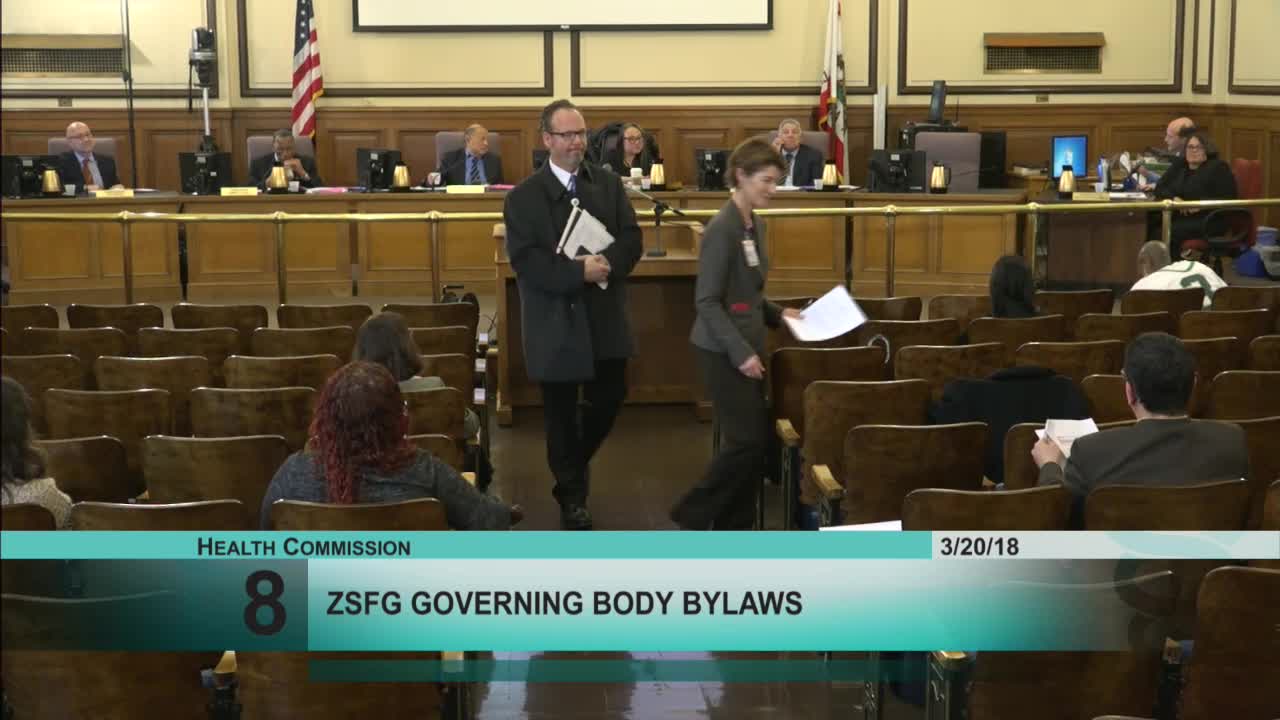
Angelica Almeida, director of the City’s Assisted Outpatient Treatment program, told the San Francisco Health Commission that AOT — the city-level implementation of Laura’s Law (Assembly Bill 1421) — has produced measurable reductions in short-term negative outcomes among people the program serves.
Almeida presented program data showing 227 information calls and 190 referrals to AOT since the program began in November 2015, with 82 referrals occurring in calendar year 2017. She said most referrals (94 percent in 2017) come from family members and treatment providers, and that referrals must be made by legally qualified requesting parties under state law.
The commission heard outcome figures Almeida described as statistically significant: overall contact with psychiatric emergency services fell from 81 percent of the population before AOT involvement to 52 percent afterward; psychiatric hospitalization contact fell from 81 percent to 48 percent; and contact with the criminal-justice system fell from 57 percent to 37 percent. Almeida summarized aggregate impacts: "76 percent of individuals either reduce or avoid contact with psychiatric emergency services, 60 percent reduce or avoid their contact with inpatient psychiatric hospitalization, and 79 percent reduce or avoid their contact with the criminal justice system." She also said average monthly contacts with emergency services and average days incarcerated showed statistically significant declines after participation.
Almeida described the program model — a mobile, multidisciplinary team that provides intensive community-based support, with clinical partners (including a UCSF Citywide case-management contract) — and said the program files court petitions only as a last resort after at least 30 days of attempted engagement. To date the city has filed 13 court petitions and five renewals; of those petitions, nine ended in settlement agreements (voluntary participation), seven resulted in court-ordered services, one petition was denied and one was withdrawn when staff could not locate the person. Almeida noted that in four of the five renewals the individual voluntarily agreed to remain in the program.
Almeida read anonymized participant feedback collected during evaluation interviews: one participant said, "My experience with the AOT program has been positive. Overall, I'm feeling like a better me." Families reported improved knowledge of services and appreciation for support: "AOT saved my family in a way I can't explain," one family member said.
During public comment Michael Wright raised concerns about local housing developments and inclusionary-housing enforcement (Mission Rock), arguing the development was not meeting very-low- and low-income unit commitments. His remarks were not addressed during the meeting.
Commissioners asked about referral-volume changes and outreach; Almeida said an initial surge after program launch (about 30 referrals in the first month) skewed year-to-year comparisons and that the program conducts ongoing training for qualified requesting parties to maintain awareness. Commissioners praised the addition of a program social worker and discussed integration with hospital discharge planning.
The Health Commission took no formal action during the presentation; the item served as an informational update and a progress report ahead of the city's required evaluation and forthcoming report to the Board of Supervisors.