Get Full Government Meeting Transcripts, Videos, & Alerts Forever!
Get email alerts on the Public Health Stds topic
No spam. Unsubscribe anytime.
HIV diagnoses fall in San Francisco even as gonorrhea, chlamydia and syphilis rise; health department outlines testing, outreach and lab improvements
Summary
San Francisco Department of Public Health officials told the Health Commission that HIV diagnoses are declining while cases of chlamydia, gonorrhea and early syphilis are increasing, concentrated among men who have sex with men and disproportionately affecting Black residents. The department described expanded testing, faster lab turnaround, targeted outreach and new behavioral strategies to reduce disparities.
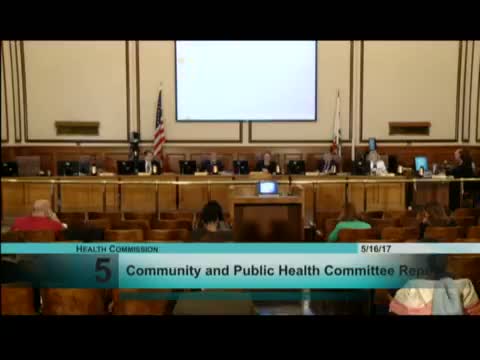
Dr. Susan Phillips, director of the Disease Prevention and Control branch and the city's STD controller, told the commission on May 16 that "HIV diagnoses are going down," but that rates of chlamydia, gonorrhea and early syphilis "are going up." She framed the trend as a paradox tied to the success of HIV treatment and pre-exposure prophylaxis (PrEP) and said STD prevention must be integrated with HIV work.
The department presented surveillance and behavioral data showing declines in reported 100% condom use and rising self-reported gonorrhea and chlamydia among men who have sex with men (MSM). Dr. Phillips said these patterns predate widespread PrEP use and noted racial disparities: while case counts have been higher among white MSM, rates per 100,000 show substantially higher burdens among Black/African American MSM.
San Francisco's municipal City Clinic was highlighted as a central hub: nearly 18,000 visits last year, 53% of visits by people of color, about 500 PrEP initiation visits in 2016, and City Clinic diagnosed roughly 13% of the city's new HIV infections in 2015. Dr. Phillips described a small Ryan White'funded HIV clinic at City Clinic and emphasized its role in rapid linkage to care.
The department credited recent improvements in the Public Health Laboratory for a 22% increase in tests processed between July 2016 and March 2017 while turnaround time fell by 60% after replacing aging equipment and implementing electronic ordering at City Clinic. Faster results shorten the time to treatment and to interrupt onward transmission, Dr. Phillips said.
On interventions, DPH described several steps already underway: removing ordering barriers in electronic health records, academic detailing to support clinicians in three-site testing (urethral, pharyngeal, rectal), expanded community engagement and social marketing guided by focus groups and town halls, and partnerships such as the Black African American Health Initiative and Project BRIDAL (CDC-funded work focused on reducing HIV disparities among MSM of color and trans women). A proposed Mission-based community pharmacy PrEP model will combine PrEP delivery with STD screening and reduce stigma, presenters said.
Joe Hollendoner, CEO of the San Francisco AIDS Foundation, told the commission his organization provides "over 16,000 STI screenings each year," and described a Magnet Express program for asymptomatic screening to expand capacity. Public commenter Luke Adams, a bisexual man and mental health provider, described "condom fatigue" beginning decades earlier and warned that culturally insensitive messaging can alienate communities; commissioners discussed balancing condom promotion with expanded testing and treatment access.
Commissioners pressed on antimicrobial resistance (particularly for gonorrhea), the presence of largely asymptomatic infections in the throat and rectum among MSM, and partner services capacity given increasing case counts. Dr. Phillips said resistance is an ongoing concern under national surveillance and that staff must prioritize partner investigations using epidemiologic data; she reported two congenital syphilis cases in 2016 and one in 2015 and said the department remains vigilant.
The department estimated a lab-based test kit cost of roughly $10 per test but said retail or home-testing models require further analysis. Dr. Phillips and commissioners agreed on a mixed strategy: continue to support condom users while expanding rapid, express and targeted testing, improving provider capacity, and tailoring outreach to reduce disparities.
The commission thanked staff for the report and requested follow-up on behavioral interventions, the 340B pharmacy item raised earlier in the meeting, and additional data on priority populations and reentry populations.