Get Full Government Meeting Transcripts, Videos, & Alerts Forever!
Get email alerts on the Vision Zero topic
No spam. Unsubscribe anytime.
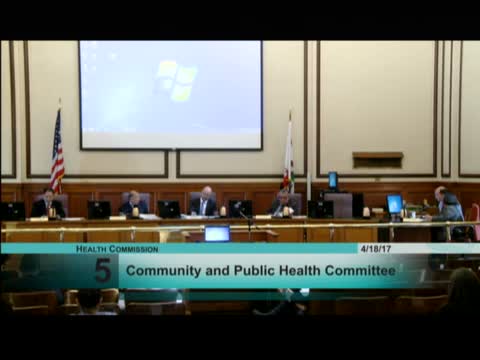
Health commission endorses Vision Zero resolution aiming for zero traffic deaths by 2024
Summary
The San Francisco Department of Public Health commission unanimously adopted a resolution endorsing the Vision Zero goal of zero traffic deaths by 2024 and the 2017-2018 action strategy, citing partnerships with city agencies and pending state legislation on automated speed enforcement (AB 342).
The San Francisco Department of Public Health commission voted unanimously to endorse the Vision Zero goal of eliminating traffic deaths by 2024 and to adopt the 2017-2018 Vision Zero action strategy.
Megan Weir, co-chair of the Vision Zero Task Force and director of the program for health equity and sustainability, told commissioners that the strategy sets a high-level framework and that the department is leading evaluation and community engagement efforts. She noted AB 342, a state bill authorizing automated speed enforcement pilots, has cleared one committee and will next proceed to transportation committees, a milestone Weir said would enable local pilots in San Francisco and San Jose.
Commissioners asked about implementation timing and the action plan that accompanies the resolution; Weir said many actions are already underway and that some items in the plan are due in 2018 or will be reported annually. After brief discussion, a motion to adopt was made and seconded; the chair called the question and commissioners voted “aye,” with the clerk recording the resolution as unanimously adopted.
The resolution endorses existing city actions to address traffic safety and signals DPH's role on evaluation and community engagement. The commission did not record a roll-call vote with individual tallies in the public transcript; staff noted there were no public comments on the item.
Next steps described by Weir include continued coordination with city partners, tracking of performance measures identified in the action plan, and monitoring state legislation that would enable automated enforcement pilots. The commission did not set additional reporting dates at the meeting but staff indicated the action plan will be available to commissioners and some measures will be reported annually.