Get Full Government Meeting Transcripts, Videos, & Alerts Forever!
Get email alerts on the Mental Health Services Act topic
No spam. Unsubscribe anytime.
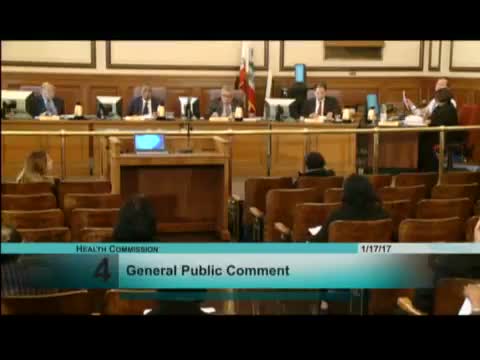
Commission hears MHSA annual update and ARCHES data plans to target services
Summary
The commission received the Mental Health Services Act annual update covering MHSA-funded programs (full-service partnerships, early psychosis, prevention) and a presentation on ARCHES, a new population-health data unit intended to integrate EHR data to identify care and PrEP needs.
Commissioners got an annual update on Mental Health Services Act (MHSA) activities and a briefing on ARCHES, a new Applied Research Community Health Epidemiology and Surveillance Team intended to improve population health analytics.
A commissioner reported that MHSA, funded by a 1 percent tax on incomes over $1 million, provides San Francisco roughly $25–30 million a year. The department highlighted three program areas: Full Service Partnerships for people with severe mental illness (the presenter cited about 1,051 clients and reported outcome improvements including an 85 percent drop in arrests, a 76 percent drop in mental health and substance-use emergencies, and a 70 percent reduction in school suspensions for program participants); an early psychosis program serving about 80 clients with an estimated 30 percent reduction in patient episodes; and prevention/early intervention programs including school-based services (about 3,000 interventions reported last year).
Staff also described the state—s "No Place Like Home" bond (Prop 63) as a funding source for permanent supportive housing and noted San Francisco has drawn down funds for multiple projects and could be eligible for additional allocations as regulations are finalized. The department said MHSA funds are flexible but carry state regulations and that the city maintains an MHSA reserve to weather fluctuations in tax revenues.
Presenters then described ARCHES, which merges TB/HIV/STD data and other surveillance datasets into a unified research unit to enable patient-centered surveillance, predictive analytics, and identification of individuals who may benefit from interventions such as PrEP. Staff said a CDC grant supported initial data integration work and that ARCHES will work alongside the new EHR system to improve clinical outreach and population-management capabilities.
Commissioners asked about the three-year MHSA planning cycle and timing for the draft plan; staff said a three-year draft will be developed with community input and returned to committees for review before state submission.