Get Full Government Meeting Transcripts, Videos, & Alerts Forever!
Get email alerts on the Housing Sro topic
No spam. Unsubscribe anytime.
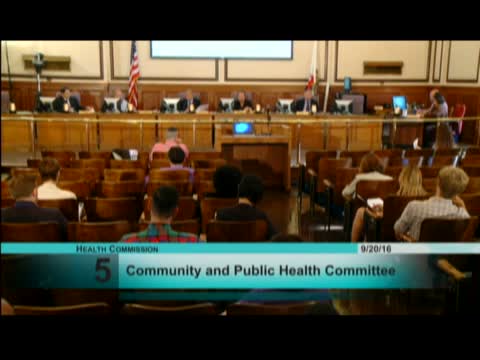
Health Commission adopts SRO health-impact recommendations, backs mandatory operator training and data-sharing
Summary
The Health Commission unanimously adopted a resolution endorsing five recommendations from an SRO health impact assessment, including mandatory operator training, consolidated educational materials, standardized inspection data and an interagency housing data workgroup; commissioners amended wording to note increasing drug overdoses in SROs and requested a one-year report back.
The San Francisco Health Commission voted to adopt a resolution endorsing recommendations from a health impact assessment (HIA) aimed at improving conditions in single-room occupancy (SRO) hotels and reducing health disparities among residents.
Cindy Commerford of the Department of Public Health's Office of Policy and Planning summarized the three-year project and stakeholder outreach that underpinned the report. "We came up with a list of 5 recommendations," Commerford said, listing a mandatory training for SRO operators, consolidated culturally competent educational materials, standardized and automated housing-inspection data, integration of that data into city business processes, and creation of an interagency housing-data subcommittee to track performance measures.
Commissioners pressed staff on implementation details: who would carry out operator training, how funding would be identified and whether the approach should rely more on enforcement or incentives. Commerford said the Department of Public Health would lead the first two recommendations (training and the consolidated guidance) and that some of the other recommendations could proceed via legislative paths or departments already working on related reforms.
Public commenter Michael Petrelis linked the SRO issues to conditions at nearby public spaces, saying unsanitary conditions at 16th and Mission (BART Plaza) contribute to health problems among SRO residents. "That plaza contributes to SRO and homeless folks with asthma and other environmental problems," Petrelis told the commission.
Commissioners also debated a wording change about substance use. After discussion and input from the medical examiner's office, the commission inserted language noting that "deaths from drug overdoses are increasing in SROs," and that substance use disorder remains a continued health concern. The commission also moved a final resolve requiring the department to report back in one year on implementation progress.
A motion to adopt the resolution was moved and seconded and the commission approved the measure by voice vote.
What the resolution asks for: mandatory operator training to certify SRO operators on sanitation and tenant engagement; a single consolidated guide of city resources for operators; standardization and automation of inspection data across departments to enable risk-based inspection and more timely abatement; incorporation of SRO-related data into relevant city business processes; and creation of an interagency data workgroup to set and track performance measures.
The resolution directs the Department of Public Health to help convene partners, identify funding pathways for sustainable implementation and return to the commission in one year with a status report.
The commission's action does not itself create new enforcement authorities. Commissioners discussed a mix of "carrot and stick" approaches and emphasized the need for sustained funding and citywide leadership to make the recommendations effective.