Get Full Government Meeting Transcripts, Videos, & Alerts Forever!
Get email alerts on the Hospital Transition topic
No spam. Unsubscribe anytime.
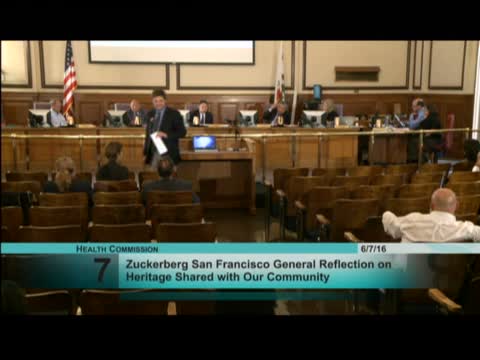
Zuckerberg San Francisco General leaders mark move into new hospital, detail transition and community plans
Summary
Hospital leaders and DPH commissioners celebrated the opening of the new Zuckerberg San Francisco General, described the logistical move of patients and staff and outlined continued work to optimize space, staffing and community partnerships.
Zuckerberg San Francisco General—s leadership told the Department of Public Health commission that the hospital—s transition into its new building completed a complex, team-driven transfer of patients and operations and kickstarted a period of operational optimization.
"There were a 158 patients who were sequenced the day of the move," Dr. Ehrlich said, describing the command-center coordination that directed bed assignments, transport teams and an IT "nerve center" to keep systems running throughout the transfer. Hospital staff reported that the move began about 7:30 a.m. and that the last patient was settled in the new space by roughly 4:45 p.m.
The report to commissioners emphasized three immediate priorities: ensuring clinical and IT systems are stable, studying how to optimize the new built environment for patient flow and outcomes, and preserving community-centered approaches to care developed during earlier public-health crises. Jeff Critchfield, chief medical experience officer, framed those priorities as rooted in the hospital—s history of responding to epidemics and partnering with community groups, urging continuation of patient advisory councils and place-based outreach.
Commissioners and staff credited hospital teams across functions for the move—s safe execution. Dr. Ehrlich singled out the IT team, bed-control operators, transport staff and nursing leadership for keeping operations coordinated during the move. Rachel Kagan, the hospital—s public information officer in the command center, and clinical leaders described an intense 24-hour period that included the hospital—s first trauma calls after midnight and newborns moved into the new labor-and-delivery and NICU spaces.
The presentations also detailed next steps: a vacancy-and-repurposing plan for the old Building 25, follow-on capital projects such as a hybrid MRI and HVAC repairs, and ongoing process work to identify how the department will use the new space. Hospital leadership said they will continue to provide quarterly updates to the commission as staff and clinicians adapt workflows to the new facility.
Commissioners responded with praise and cautions: while the move was widely described as a successful operational achievement, members pressed hospital leaders to keep the initial momentum and to prioritize measurable improvements in quality and reimbursement performance so the facility—s finances match its scale.