Get Full Government Meeting Transcripts, Videos, & Alerts Forever!
Get email alerts on the Homelessness Transitions topic
No spam. Unsubscribe anytime.
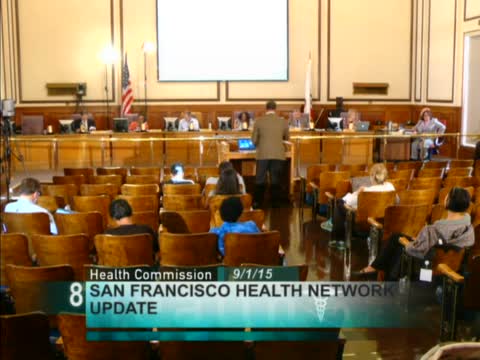
Health Network highlights metrics gains while Transitions division warns of lost stabilization capacity and homelessness pressures
Summary
Network leadership reported progress on several '10 way forward' measures and proposed a 'true north' metrics framework; the new Transitions division described outreach to ~100 encampments (≈626 people), Navigation Center results (75‑bed pilot, ~42 days to permanent housing) and a loss of roughly 230 stabilization rooms over two years, stressing housing as the main bottleneck.
San Francisco Health Network leaders presented an 18‑month metrics update and an operational plan to refocus measures under a 'true north' framework, while the department’s new Transitions division outlined escalating homelessness and placement challenges.
Roland Pickens, director of the San Francisco Health Network, and Dr. Alice Chin reviewed the '10 way forward' metrics and said the network met or exceeded targets in five areas, including primary care access and several care coordination measures. They acknowledged unevenness across measures and emphasized a shift from high‑level 'watch' metrics to more actionable 'driver' metrics. Pickens and Chin announced a planning retreat to develop a 'true north' framework to align network goals and metrics.
Kelly Hiramoto, acting director of Transitions, then presented a detailed account of outreach and placement operations. She said the Homeless Outreach Team engaged roughly 100 encampments in May—"an estimated 626 people"—and reported the Navigation Center pilot averages about 42 days from street to permanent housing. Hiramoto warned the department has lost substantial stabilization capacity: "San Francisco homeless outreach team has lost about 230 stabilization rooms across the last 2 years," she said, and noted boarding care and residential facilities are closing, driving more placements out of county.
Hiramoto described several local responses: expansion of the Navigation Center model, partnerships with business improvement districts for targeted outreach, a peer‑led Hummingbird respite program addressing food insecurity and social support, and a housing pipeline that currently includes 1,685 direct‑access units across 36 sites plus a new 45‑unit project with elevator access. Commissioners and staff discussed workforce challenges, long civil‑service hiring timelines, the need for more certified addiction clinicians, and the role of data standardization in measuring program impact.
Why it matters: staff said housing and access to appropriate residential placements (including non‑ambulatory and skilled nursing beds) are primary constraints on moving medically and behaviorally complex patients out of high‑cost settings. Standardized encounter data and monthly high‑user lists give the department tools to act faster on high‑need individuals, but the loss of local stabilization rooms and limited new housing supply are immediate barriers.
What happens next: staff will return with the network's proposed 'true north' metrics after the planning retreat, and commissioners asked for further briefings on hiring timelines, SNF capacity and targeted strategies to keep key beds in circulation.