Get Full Government Meeting Transcripts, Videos, & Alerts Forever!
Get email alerts on the Assisted Outpatient Treatment topic
No spam. Unsubscribe anytime.
San Francisco to launch assisted outpatient treatment next month, officials say
Summary
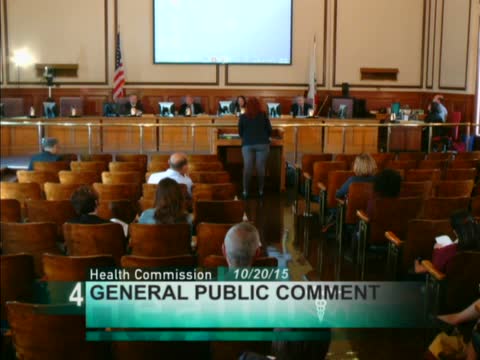
The Health Commission heard an implementation briefing on Assisted Outpatient Treatment ("Laura—s Law") and was told San Francisco will start the program on Nov. 2, using recovery-oriented community teams; staff estimate fewer than 100 people will meet criteria and forecast about $30,000 per person annually in services.
Angelica Almeida, director of the Department of Public Health—s Assisted Outpatient Treatment program, told the Health Commission the city will begin the program on November 2.
"Assisted Out patient treatment is a new tool that we'll have in our tool belt to support and assist individuals with mental illness, as well as their families in the communities where they live," Almeida said during a presentation to commissioners.
The program, commonly called Laura—s Law, was enacted in California by Assembly Bill 1421 and incorporated into the Welfare and Institutions Code. Almeida said San Francisco—s version emphasizes voluntary engagement and recovery-based care, and it adds peer specialists and a family liaison to the care team.
Almeida described who may make a referral under the law and stressed that referrals are limited to qualified requesting parties such as family members, facility directors, licensed mental-health providers or probation/parole officers who carry a caseload. She clarified that police officers who do not carry a caseload are not, by statute, qualified referrers.
On eligibility, Almeida said an individual must be a San Francisco resident 18 or older with a severe, persistent mental illness and demonstrate a pattern of treatment noncompliance: "either their mental health has led to 2 or more psychiatric hospitalizations or incarcerations where they received mental health treatment within the last 36 months or 3 years, or they have 1 or more documented threats, attempts, or acts of violence towards themselves or others in the last 48 months or 4 years." The care team will evaluate whether less-restrictive options have been tried and whether AOT is likely to benefit the person.
City staff said they expect the program to be small. "1 in 20000 to 25000 people meet this criteria, so we are anticipating fewer than 100 people in San Francisco will meet this criteria," Almeida told the commission. She added that many referrals will be managed through voluntary services before court petitions are filed.
Almeida and commissioners discussed program oversight and evaluation. Counties must file an annual report to the state that includes quantitative measures (referrals, outreach, court petitions) and qualitative feedback; San Francisco will also conduct a three-year independent evaluation.
Commissioners asked about cost and funding. Almeida said the program will be funded through the Mental Health Services Act and that some services may be reimbursable through Medi-Cal; staff estimated per-person costs but cautioned the number is provisional: "we're estimating $30,000 a year per person, but of course that's to be determined." Commissioners also raised questions about consumer opposition and local differences; Almeida said San Francisco has emphasized peer involvement and stakeholder outreach to maximize voluntary participation.
The commission did not take action on AOT at this meeting; staff said they will return with ongoing reports as the program begins.