Get Full Government Meeting Transcripts, Videos, & Alerts Forever!
Get email alerts on the Prop Q Snf Closures topic
No spam. Unsubscribe anytime.
Health Commission adopts Prop Q resolution asking SFDPH to study Saint Mary's skilled nursing bed reductions and report back in six months
Summary
After a Prop Q hearing on Saint Mary's planned reduction of skilled nursing facility (SNF) beds, the Health Commission approved a resolution urging SFDPH to study short-term SNF and post-acute needs, work with hospitals and community partners, and report findings within six months.
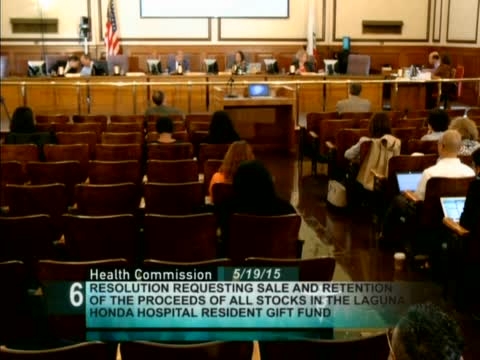
The Health Commission held a Prop Q hearing on proposed reductions in skilled nursing facility (SNF) beds at Saint Mary's Medical Center and unanimously adopted a resolution directing the San Francisco Department of Public Health (SFDPH) to research short-term SNF and post-acute care needs and report back within six months.
Stena Patel, a health planner for SFDPH, presented estimates and projections: San Francisco was estimated to have about 1,240 hospital-based skilled nursing beds and 1,131 licensed beds in freestanding skilled nursing facilities (2013); PFH's analysis projected a total of 2,371 skilled nursing beds by 2020 under current assumptions. Patel said the majority of hospital-based long-term beds are concentrated at Jewish Home and Laguna Honda, with Laguna Honda representing about 62% of hospital-based beds and close to 70% of hospital-based long-term beds.
Patel and staff warned that closing hospital-based short-term SNF beds without corresponding investment in community-based post-acute services could create capacity risks, delay discharges and increase readmissions; commissioners noted that closures at other hospitals earlier in the decade raised similar concerns.
Public commenter Patrick Manet Shaw cited historic declines in SNF beds citywide and urged the commission to find that Saint Mary's closure would be detrimental; he also requested aggregate discharge data, including out-of-county discharges. Commissioners discussed scope and data needs and agreed the resolution should call for both needs assessment and actionable recommendations. The city attorney's advice that Prop Q allows seeking alternatives and remedies was referenced in the discussion.
The commission accepted editorial language changes and voted to approve the resolution; staff said SFDPH could meet a six-month timeline for the report and would include recommendations and potential alternatives for post-acute care.
The resolution directs SFDPH to coordinate with hospitals, city agencies and community-based organizations in producing a report with recommendations and implementation ideas to help ensure continuity of post-acute care services in the face of hospital-based SNF reductions.