Get Full Government Meeting Transcripts, Videos, & Alerts Forever!
Get email alerts on the Air Quality topic
No spam. Unsubscribe anytime.
Clean Air group urges Health Commission to reject Candlestick dust-mitigation plan
Summary
Dr. Raymond Tompkins, representing the Clean Air Healthy Initiative Alliance, told the San Francisco Health Commission the current dust-mitigation plan for the Candlestick redevelopment is ineffective, alleging misinstalled monitors and water failures; the commission asked the health director to investigate.
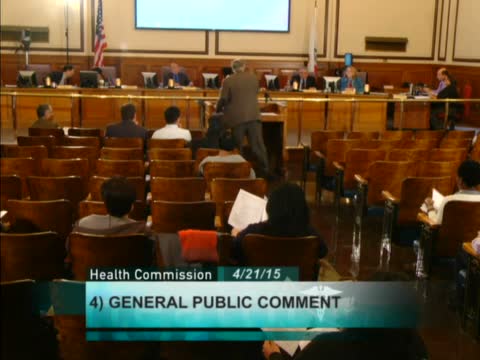
Dr. Raymond Tompkins, an officer of the Clean Air Healthy Initiative Alliance, urged the San Francisco Health Commission on April 22 to reject the city's current dust-mitigation plan for the Candlestick redevelopment, saying it does not protect nearby residents.
"The bottom line is that the organization is asking that the current DUS mitigation plan be rejected, and that is ineffective," Tompkins told the commission during the public-comment period. He said his group found dust in homes near construction, that monitors at Alice Griffith Park were installed incorrectly and that the standards applied in the Southeast sector "are lower than the state of Texas."
Tompkins also raised concerns about water service during construction, saying residents experienced water failures after contractors tapped a fire hydrant, and asked the commission to call a special session to rescind the plan.
The commission is restricted from debating items raised during general public comment that were not on the agenda. Chair (presiding) thanked Tompkins and asked Director Garcia to have department staff investigate and report back to the commission. Director Garcia acknowledged the request and said staff would look into the concerns.
What happened next: the commission did not take any immediate action on the DUS mitigation plan. The chair instructed staff to investigate Tompkins' claims and provide a response to the commission.
Why it matters: Tompkins' allegations about monitoring methods, on-the-ground dust impacts and water-supply problems, if confirmed, could prompt changes to mitigation practices for a large redevelopment project and affect public-health protections in the Bayview and southeast neighborhoods.
What to watch for: the commission's response and any follow-up report from the Department of Public Health investigating monitor placement, dust measures and water-safety reports.