Get Full Government Meeting Transcripts, Videos, & Alerts Forever!
Get email alerts on the Women Health Issues topic
No spam. Unsubscribe anytime.
San Francisco health officials cite chronic disease and stark racial disparities as top threats to women—s health
Summary
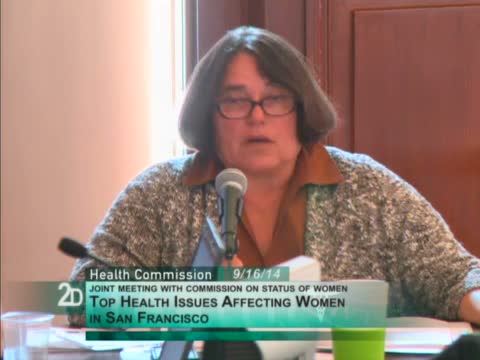
Department of Public Health presenters told a joint meeting of the Health Commission and Commission on the Status of Women that chronic diseases account for nine of the top 10 causes of death among women in San Francisco and that Black women face significantly higher death rates and poorer access to prenatal care; commissioners pressed for preventive screening, trauma‑informed care and targeted efforts for African American women.
The San Francisco Department of Public Health told a joint session of the Health Commission and the Commission on the Status of Women that chronic diseases — led by ischemic heart disease — and large racial disparities are the leading health challenges for the city—s women.
"There are approximately 356,000 adult women living in San Francisco representing 49% of the population," Amika Chaudhry, who presented the demographic overview, said. Chaudhry said women in the city are more highly educated and more likely to be insured than the statewide average, but that gender‑based income gaps persist and poverty disproportionately affects older women and female‑headed households.
Michelle Curran, an epidemiologist in the population health division, told the commissions, "Nine of the top 10 causes of death among women in San Francisco are due to chronic diseases," and that ischemic heart disease alone accounts for about 12% of female deaths. Curran said lung, breast and colorectal cancers, Alzheimer's and diabetes are also major causes, and she emphasized that death rates for these conditions are "significantly higher" among Black women; for ischemic heart disease she said the death rate for Black women is nearly three times that of Asian women.
Curran also reported disparities in maternal care: roughly 90% of pregnant women receive prenatal care in the first trimester overall, but 26% of women on Medi‑Cal did not, compared with 4% of women with private insurance; only 55% of Black mothers received first‑trimester care, she said. She said mental health needs are high — "almost 1 in 4 report needing help for mental health and or alcohol and drug use" — and that rates of hospitalization for mental health are increasing.
In discussion, commissioners and guest speakers pushed the department to prioritize prevention and trauma‑informed care. "We have a great opportunity as a health department to ensure that everyone who comes through the door is prescreened for domestic violence," former commissioner Sonia Monlera said during public comment, arguing that routine screening in clinics could prevent later harms.
Director Barbara Garcia and other DPH staff said the department has begun training providers to be a trauma‑informed system and has launched a new African American health initiative to align services and target disparities. Colleen Chavla, deputy director, cited a Mathematica review of the city—s Healthy San Francisco program (a local coordinated care access program started in 2007) that found lower rates of preventable hospitalizations among participants.
Commissioners also urged better comparative data to show how San Francisco performs against other counties and the nation, and asked the department to disaggregate data by race, insurance type and neighborhood. Several commissioners recommended expanding data collection on gender identity to capture transgender women and ensure services are inclusive.
The commission asked the department to return with more detailed plans on trauma‑informed training, the African American health initiative and preventive strategies that use the city—s clinic network to reach women who are delaying or forgoing care.
The joint meeting recessed to take several resolutions after the presentation; no vote on new policy or budgetary action was taken during the health‑issues segment.