Get Full Government Meeting Transcripts, Videos, & Alerts Forever!
Get email alerts on the Cpmc Snf Reduction topic
No spam. Unsubscribe anytime.
Health Commission finds CPMC skilled-nursing bed cuts detrimental, passes resolution 4-0
Summary
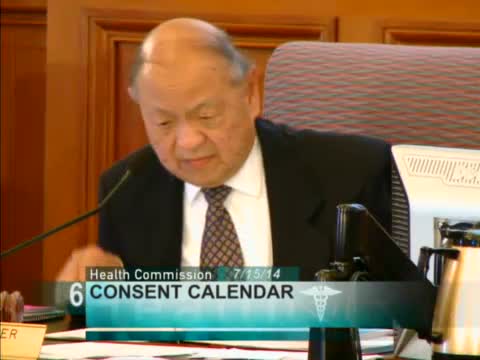
After nearly three hours of testimony from clinicians, union representatives and community advocates, the Health Commission passed (4-0) a resolution finding California Pacific Medical Center's proposed reduction of skilled nursing facility beds will be detrimental and urged CPMC to work with DPH and other stakeholders on citywide SNF and subacute needs.
The San Francisco Health Commission on July 10 (recorded in the meeting transcript) concluded a Proposition Q hearing on California Pacific Medical Center's (CPMC) proposed reductions in skilled nursing facility (SNF) capacity by adopting a revised resolution that says the cuts will have a detrimental impact on city health services and urges CPMC to work with the Department of Public Health (DPH) and other stakeholders to address citywide SNF and subacute bed needs. The resolution passed by a 4-0 vote.
Deputy Director Colleen Chavla presented corrected data and analysis from the Department's memo and the Lewin Group review, noting a long-term decline in hospital-based SNF beds and projections that citywide capacity may be inadequate for projected needs. "Given the current available information, San Francisco is likely to be 702 beds short of its projected need by 2050," Chavla said when summarizing master-plan findings cited to frame the discussion.
Public testimony featured clinicians, union representatives and community advocates who argued the cuts would harm patients and workers. Patrick Monette Shaw urged the commission to investigate out-of-county discharges and to produce contract and scope-of-work documents for the SF GetCare database; Brian Tsang of the Physicians Organizing Committee said the SNF reductions would be "a detriment to the health of our County." NUHW representatives and CPMC nurses described staffing changes, alleged under-admitting of patients, and disputed CPMC's layoff estimates.
CPMC representatives, including the hospital COO (identified in the record as Mr. Veracruz), told the commission the hospital has observed a decline in short-term SNF demand and that their proposals respond to that trend. CPMC said current staffed SNF beds number about 99, that they plan to staff about 75 during consolidation and that post-rebuild licensed SNF beds would be 38. The hospital also said it had identified retraining and other placement options for most affected employees.
Commissioners probed supply-versus-demand measures, reimbursement incentives (Medicare and Medi-Cal) that encourage short-term rehabilitation placements, and the risk that shifts in provider network decisions could push patients onto the public system. Commissioner Singer and others recommended more in-depth analysis of reimbursement forces and regional subacute capacity. The department and CPMC said they are working with the Hospital Council on a new survey of subacute needs.
After discussion the commission approved a revised resolution that replaces earlier tables with updated licensed-bed figures, memorializes concern about availability of SNF and subacute services at CPMC, and "further resolved" to encourage CPMC to work with DPH and stakeholders on citywide planning. Commissioner Singer moved that the resolution indicate the reductions would have a detrimental impact; the motion was seconded and the resolution passed 4 to 0.
The commission recorded no immediate binding mitigation or timeline in the resolution beyond the encouragement to collaborate; commissioners asked DPH to report back to the commission as that work proceeds.