Get Full Government Meeting Transcripts, Videos, & Alerts Forever!
Get email alerts on the Health It Interoperability topic
No spam. Unsubscribe anytime.
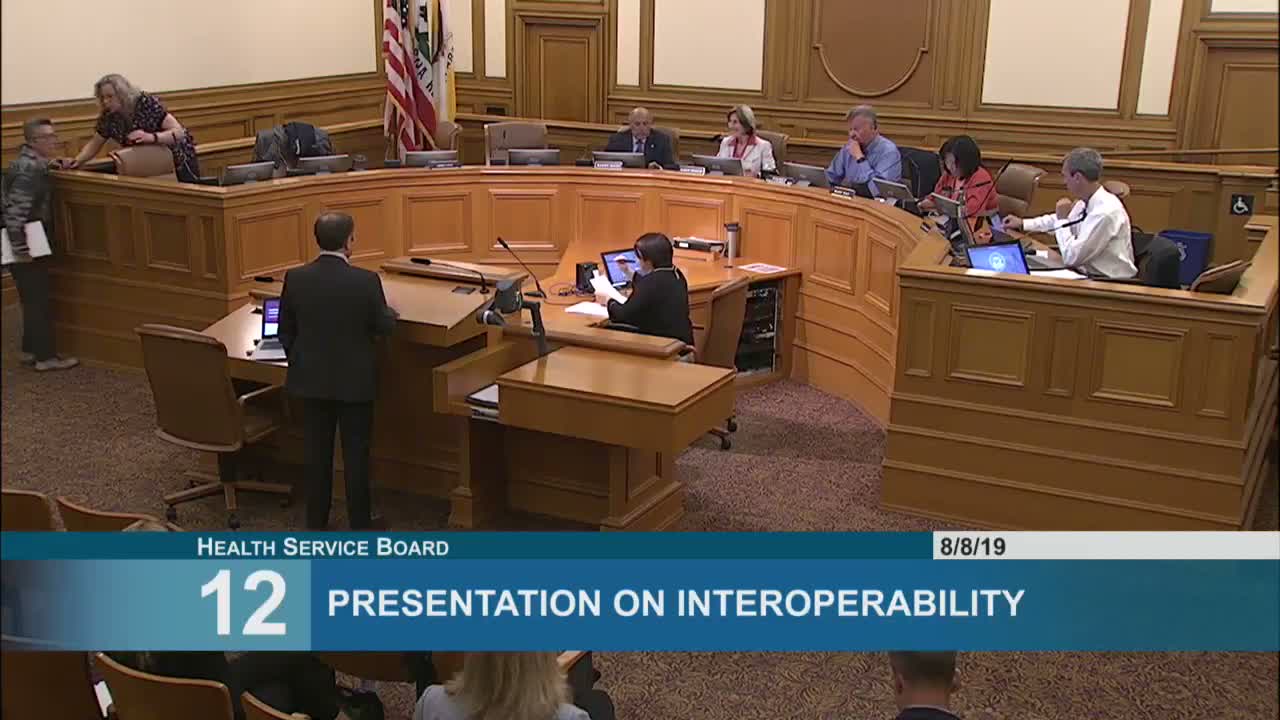
Health‑care interoperability framed as 'data liquidity' as San Francisco board hears Dignity/CommonSpirit presentation
Summary
Dr. David Kamida told the Health Service System Board that nationwide, patient‑centered interoperability ('data liquidity') is advancing through standards and networks but significant clinical integration and workflow barriers remain. He cited eHealth Exchange connections, EMS pilots and the 21st Century Cures Act as levers for scaling data sharing.
Dr. David Kamida, medical director for health informatics with Dignity Health (now part of CommonSpirit), told the San Francisco Health Service System Board that interoperability is best understood as "data liquidity" — the ability for clinical and community data to flow to where it is needed without special effort by patients or clinicians.
In his presentation, Kamida outlined three exchange methods — direct (secure email), query‑based (find-and‑request through HIEs) and consumer‑mediated aggregation — and described how national networks and standards (including TEFCA and the ONC guidance under the 21st Century Cures Act) are intended to reduce information blocking and improve scale. He said that Apple’s consumer records work had opened doors to patient‑mediated sharing and urged the board to focus on clinical utility and workflow integration as the next step beyond exchanging care summaries.
Why it matters: Kamida argued that interoperability will improve clinical decision making and population management only if shared data are integrated into clinicians’ native workflows and if community data — including social determinants of health — are incorporated into care strategies.
Kamida highlighted local and operational examples: Cerner‑based CommunityView at Dignity that queries exchange partners on each encounter, an EMS pilot that embedded advanced practitioners to reduce unnecessary ED transfers, and geocoding to identify high‑need neighborhoods for diabetes interventions. He said the system currently runs about a million queries a month across federated networks and reported connecting with the San Francisco Department of Public Health to expand community data exchange.
Direct quotes and policy drivers: “what we're really talking about with interoperability is data liquidity,” Kamida said, articulating the patient‑centered view of exchange. He noted, “1 in 3 patients are still burdened with furnishing their own healthcare information when they're seeking care in a healthcare setting,” citing real‑world friction that interoperability seeks to reduce. Kamida also emphasized that recent legislation increases vendor obligations and penalties for information blocking, shifting the implementation burden.
Board reaction and timeline: Commissioners applauded the breadth of the work and asked how long full nationwide interoperability will take. Kamida said the sector has learned from prior meaningful‑use phases and that current standards and enforcement are making progress possible, though significant technical and workflow challenges remain.
What’s next: The presentation reinforced board interest in population‑health applications of interoperability (e.g., whole‑person care pilots) and the need for contract and procurement language that requires standards‑based exchange and reporting by vendors.