Get Full Government Meeting Transcripts, Videos, & Alerts Forever!
Get email alerts on the Complex Care Management topic
No spam. Unsubscribe anytime.
Kaiser presentation: integrated electronic record and team-based care central to complex‑care strategy
Summary
Kaiser Permanente told the HSS board its integrated electronic medical record, team‑based disease management and automatic case enrollment for the sickest members reduce readmissions and improve outcomes; presenters emphasized discharge supports, care coordination, and digital tools that help members and caregivers.
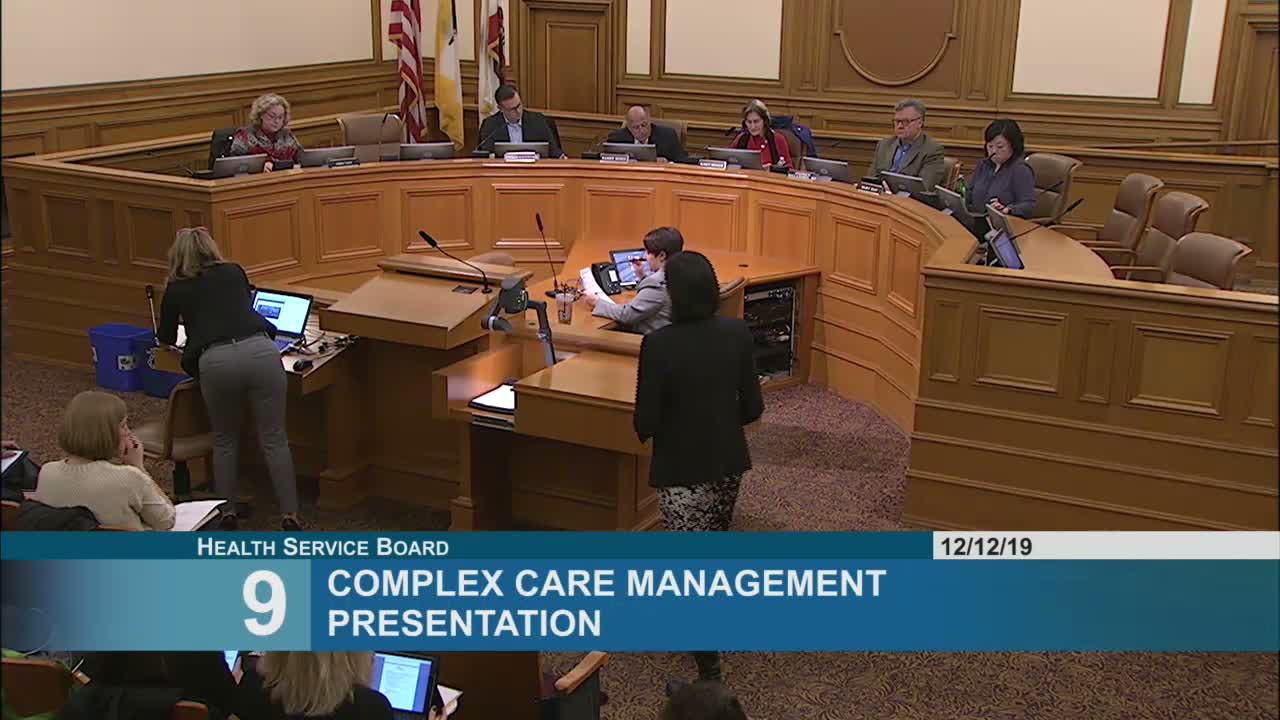
Kaiser Permanente representatives presented their model for complex‑care management and told the San Francisco Health Service System board that integration of the electronic medical record with team‑based, physician‑led care is the program's core.
"Our members have the benefit of award winning disease management programs that give them comprehensive range of integrated tools, resources, and services," said Dawn Ogawa, assistant physician in chief, explaining how KP Health Connect links hospitals, physician offices, pharmacies and labs in real time. Ogawa described proactive identification of high‑risk members, automatic enrollment in case management for the sickest patients, and rapid multidisciplinary follow‑up after hospital discharge to reduce avoidable readmissions.
Presenters cited outcome measures (HEDIS five‑star performance for diabetes and heart disease metrics) and offered examples of faster access to specialty consultations and coordinated handoffs between inpatient and outpatient teams. Board members asked about gaps in emergency‑department follow‑up and care for nursing‑home residents; Kaiser staff said electronic records and internal care‑coordination protocols are used to notify primary care teams and manage transitions, while acknowledging some systemwide opportunities remain.
Kaiser also highlighted patient‑facing tools (My Doctor, MyKP Meds) that provide appointment scheduling, refill reminders and proxy access for caregivers.
Next steps: board members requested follow‑up discussion about transitions of care for patients discharged from the emergency department and an exploration of measures to ensure continuity for patients in nursing facilities.