Get Full Government Meeting Transcripts, Videos, & Alerts Forever!
Get email alerts on the Pharmacy Policy topic
No spam. Unsubscribe anytime.
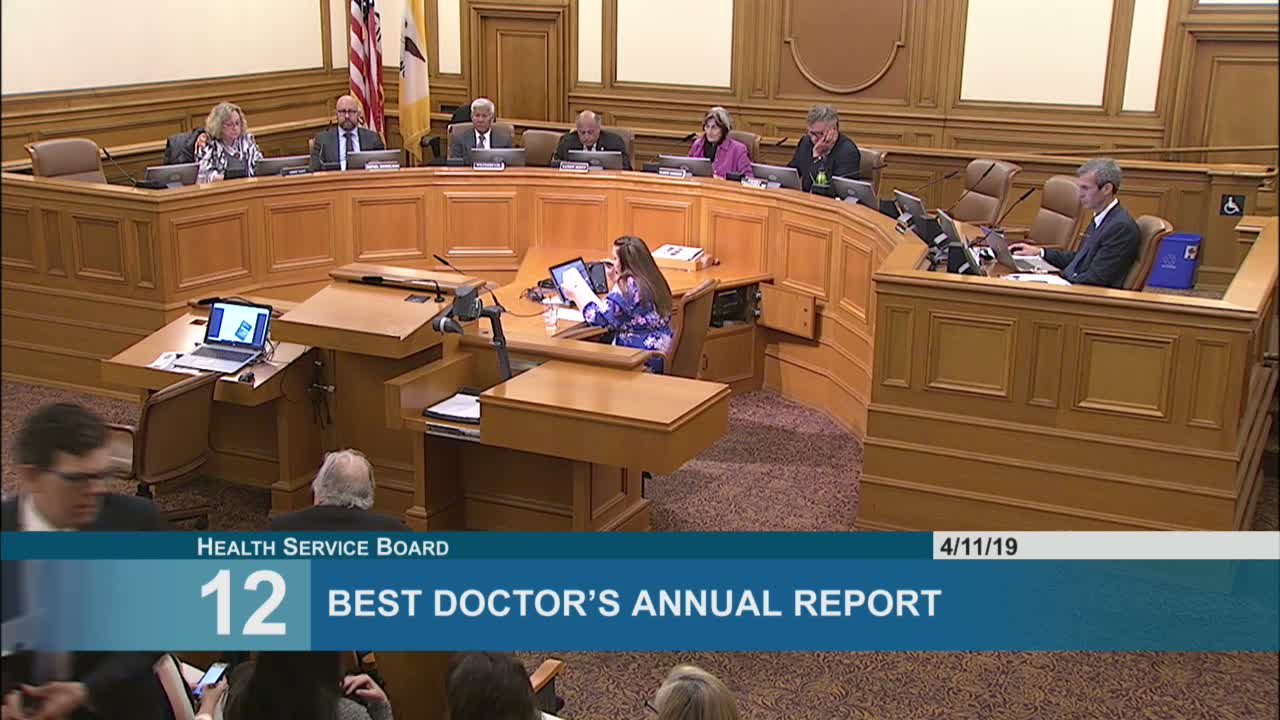
Board hears PBM and specialty drug trends; members press for rebate transparency after out‑of‑pocket case
Summary
Aon and Dr. Neil Mills briefed the board on PBM mechanics, e‑prescribing, rising specialty drug spend and biosimilars; Aon cited about $6.2M in pharmacy rebates returned to SFHSS in 2018. Public commenter Erica Maybaum described a case where paying out of pocket cost less than using her benefit and asked whether reimbursement was possible.
Aon consultants and Dr. Neil Mills presented an overview of pharmacy benefit manager (PBM) mechanics, rebate flows, and emerging trends in specialty drugs and biosimilars.
Dr. Mills explained two parallel supply chains—drug supply and financial arrangements—and said PBMs act as intermediaries between manufacturers and pharmacies while rebates, formularies and step edits influence net cost. He described e‑prescribing as an emerging tool that can show clinicians member cost share in real time and steer patients to clinically appropriate, lower cost options at the point of prescribing.
Aon cited aggregate rebate figures for SFHSS: Mike Clark said Blue Shield data showed approximately $6,200,000 in pharmacy rebates returned to SFHSS in 2018 and that rebates helped suppress net pharmacy trend. Clark and Mills acknowledged the industry’s opacity around rebate detail (drug‑by‑drug pass‑through) and said SFHSS receives aggregate rebate amounts and a share is retained by carriers.
Board members and participants asked whether re‑tiering generics or promoting biosimilars would increase transparency or risk shifting. Dr. Mills and Aon said re‑tiering is a tool to target high‑cost generics and that biosimilars may reduce price over time but raise questions about clinical substitution and member confidence.
Public comment: Erica Maybaum, a Blue Shield enrollee, described being quoted a lower cash price at a specialty pharmacy than what her plan required and asked whether she could be reimbursed for the difference. SFHSS staff said they were working with the member and the carrier to resolve specific cases and would continue to intervene on behalf of members.
Next steps: staff will continue discussions with carrier account teams about rebate reporting, plan practices for specialty drugs and how second‑opinion and reimbursement policies are applied; board members asked staff to report back with more granular rebate and pass‑through information where available.