Get Full Government Meeting Transcripts, Videos, & Alerts Forever!
Get email alerts on the Medical Coverage Policy topic
No spam. Unsubscribe anytime.
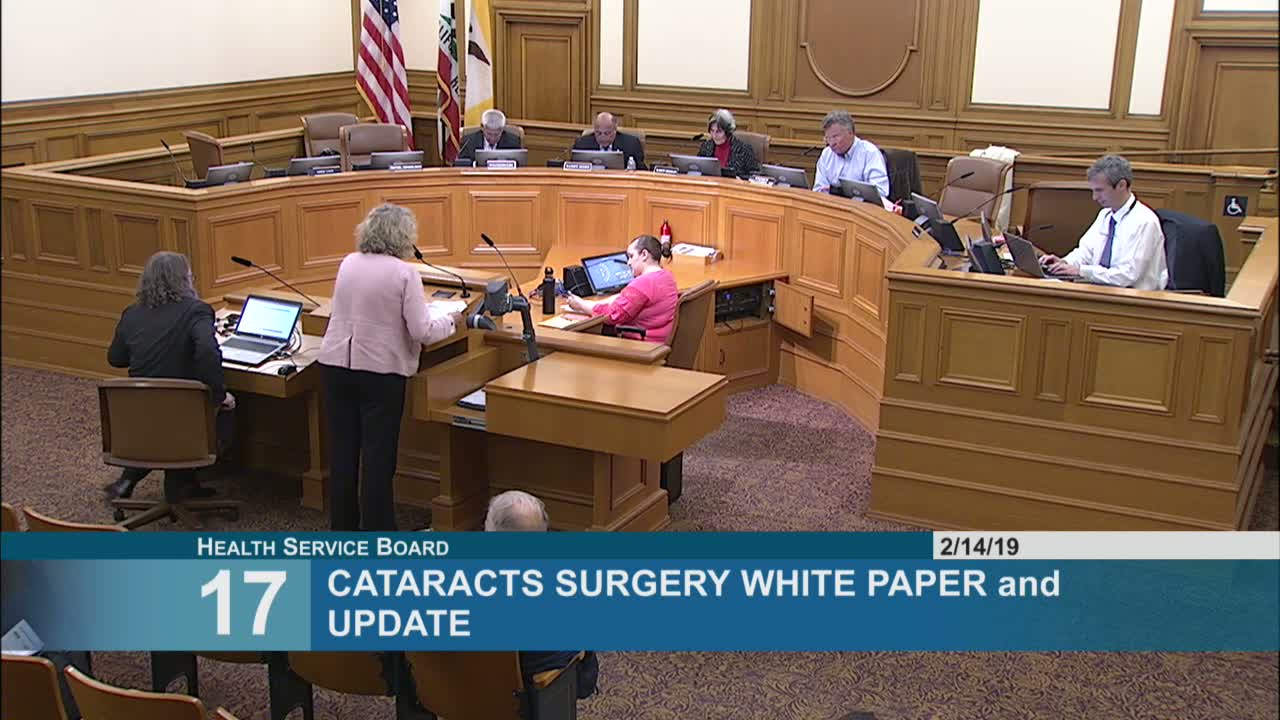
Board retains traditional cataract surgery coverage after staff white paper on laser-assisted techniques
Summary
After reviewing a white paper and subject-matter advice, SFHSS staff recommended—and the board accepted the recommendation—to maintain traditional cataract surgery coverage because laser-assisted cataract procedures showed no proven outcome benefit and carry higher complication risk and variable payer coverage.
Executive Director Abby Yount presented a white paper on laser‑assisted versus traditional cataract surgery prepared with clinical experts and network plan input. Yount said the review found no clear evidence of improved patient outcomes for laser-assisted cataract surgery; it can carry a higher risk of complications, longer operating-room time, and inconsistent payer coverage.
"We are recommending that we maintain the traditional cataract surgery coverage in our medical plans based on these findings from subject matter experts, network health plans and clinical research," Yount said. Board members asked whether aftermarket or premium lenses that reduce dependence on glasses could make a long-term economic case; staff said advanced lenses can be implanted using traditional surgical techniques but are more often elective and may be offered as out-of-pocket options or via limited coverage rules when medically indicated.
Several retirees and members asked the board whether Medicare or specific carriers might cover laser-enabled procedures; staff said Medicare generally does not reimburse laser‑assisted cataract surgery and that coverage varies by carrier (e.g., Kaiser limits to traditional techniques; UnitedHealthcare may have a fee-schedule approach). The board’s policy direction was to retain traditional cataract coverage while allowing members to pursue elective options out-of-pocket or through carrier-specific arrangements.