Get Full Government Meeting Transcripts, Videos, & Alerts Forever!
Get email alerts on the Primary Care Transformation topic
No spam. Unsubscribe anytime.
UCSF expert outlines '10 building blocks' for high‑performing primary care and urges investment
Summary
Dr. Mariana Kong (UCSF) told the board that patient-centered medical homes and the '10 building blocks' for primary care can improve quality and lower costs but require investment, team-based staffing and alternative payment models such as care coordination fees and shared savings.
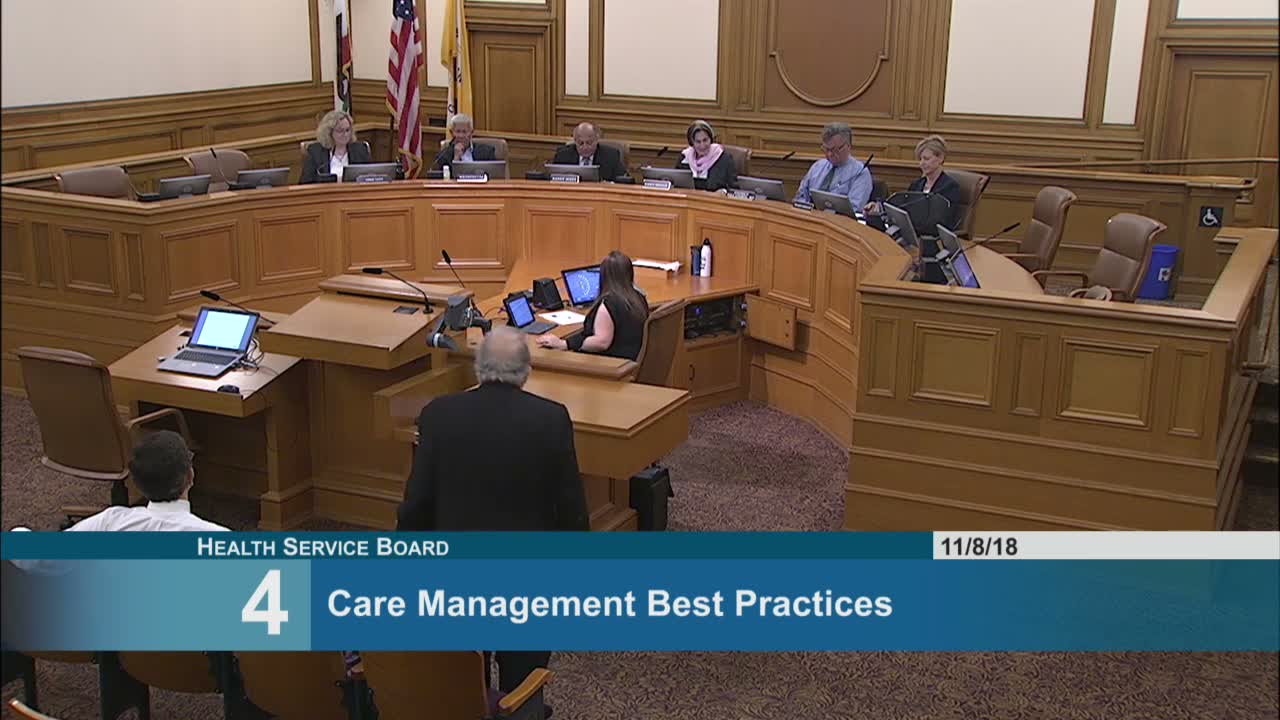
Dr. Mariana Kong, a physician with the UCSF Center for Excellence in Primary Care, told the San Francisco Health Service Board that patient-centered medical homes (PCMH) and primary-care transformation are central to improving population health and controlling costs.
Kong described the Center’s ‘‘10 building blocks’’ of high-performing primary care—including empanelment, team-based care, population-based management, care coordination and a ‘‘template of the future’’ that supports non‑visit work—and said accreditation (for example, NCQA recognition) is one signal of capability but not a guarantee of real-world performance. She described evidence linking stronger primary-care supply to better quality and lower spending, and reviewed payment and support models (blended payment, care-coordination fees, CPC+).
Why it matters: SFHSS population health and cost-control goals depend in part on accessible primary care and stronger primary‑care capacity in the region. Kong emphasized that meaningful transformation requires funding for team staff, practice facilitation and data/registry systems.
Details and board feedback: Kong summarized pilot examples (UCSF Health’s PCMH work, Medicaid/Medicare initiatives like CPC+) and stressed that many clinics lack empanelment or reliable registries, which hampers population management. Board members asked about staff cross‑coverage, empirical panel definitions and how to identify high-functioning practices; Kong recommended standardized protocols, cross‑training, and use of NCQA listings as a starting point while acknowledging high-performing clinics may not always seek accreditation.
Public comment and closing: Multiple public commenters commended the presentation and suggested leveraging SFHSS data and emergency planning contexts. The item remained informational; board members asked staff to keep the 10 building blocks as a reference if the board revisits PCMH-related investments.