Get Full Government Meeting Transcripts, Videos, & Alerts Forever!
Get email alerts on the Medicare Advantage topic
No spam. Unsubscribe anytime.
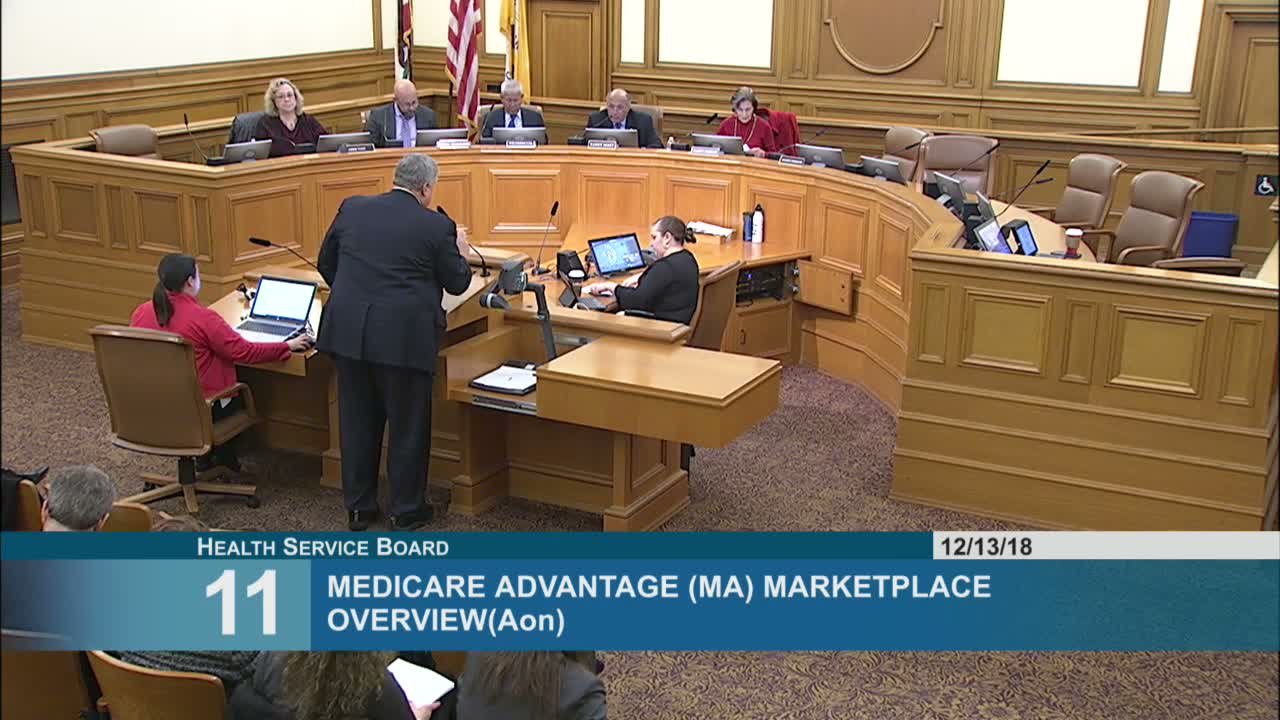
Aon tells SFHSS Medicare Advantage shift saved the system; board raises auditing and care‑denial concerns
Summary
Aon presented a Medicare Advantage marketplace overview that estimated roughly $10 million annual savings from SFHSS’s 2017 migration to MA plans and described star ratings, risk adjustment and supplemental benefits. Commissioners and public commenters questioned auditing and care‑denial risks under MA plans.
Mike Clark of Aon summarized national trends and SFHSS experience with Medicare Advantage (MA) plans and responded to board and public questions about risk adjustment and quality measures.
Clark told the board that MA plans’ market share has grown substantially and that the SFHSS decision to consolidate MA offerings in 2017 produced sizable savings: "Our estimate is about $10,000,000 annually," he said, and he later estimated more than $30,000,000 in savings over a three‑year period from the UHCMAPPO implementation.
Nut graf: Clark compared the local Kaiser Permanente Senior Advantage (KPSA) HMO and the UnitedHealthcare (UHC) MAPPO national PPO offering, outlined how CMS 'star' ratings and risk adjustment affect plan payments, and described newer CMS flexibility that allows certain supplemental benefits (for example, care‑related transportation and post‑discharge meals) when tied to health outcomes.
Key debate points: Board members and members of the public pressed Clark on how risk adjustment and audits are performed and whether the system can detect inappropriate upcoding. One board member cited an article alleging upcoding lawsuits against private plans; Clark said aggregates and risk‑score analysis (through the all‑pairs claims database and Truven) inform renewal discussions and that SFHSS engages partners to understand risk adjustments. Dennis Krueger, a retired firefighter, asked how medical records are correlated across providers and whether specialists’ test results are coordinated with a primary care physician under the UHC MAPPO model.
Other notes: Clark explained UHC’s 'House Calls' program (annual nurse‑practitioner visits that can result in program referrals) and emphasized star ratings as a source of federal bonus funding that can reduce premiums. Kate Kessler of Kaiser advised the board that a local NUHW strike was underway but that Kaiser facilities remained open and contingency plans were in place.
Outcome and next steps: The presentation led to requests for staff to provide more detail on audit policies and risk‑score monitoring going into the next renewal cycle; Clark and staff indicated further analysis and a March timeframe for deeper risk‑score reporting.