Get Full Government Meeting Transcripts, Videos, & Alerts Forever!
Get email alerts on the Payment Reform topic
No spam. Unsubscribe anytime.
Catalyst for Payment Reform offers mixed evidence on whether payment reform lowers costs
Summary
Suzanne Delbanco of Catalyst for Payment Reform told the board payment-reform approaches have expanded but evidence of consistent cost and quality gains is mixed; she estimated about half of commercial payments now include some quality incentive and urged rigorous, independent evaluation.
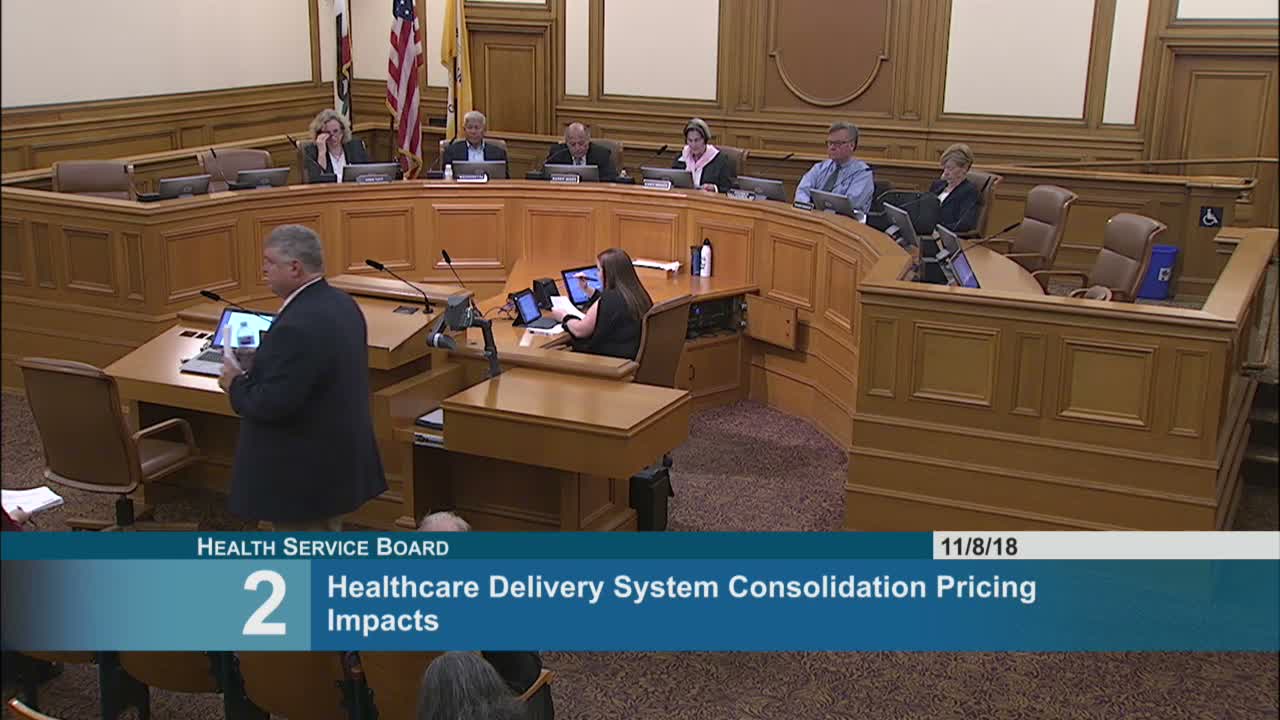
Suzanne Delbanco, executive director of the nonprofit Catalyst for Payment Reform (CPR), told the San Francisco Health Service Board that payment reform—shifting away from pure fee-for-service and toward value-based methods—has grown but that evidence of consistent, systemwide cost savings remains mixed.
Delbanco summarized CPR’s work measuring payment reforms nationwide and said roughly ‘‘about 50¢ on every dollar’’ in the commercial market now carries some quality incentive. She said most commercial reforms so far are ‘‘upside only’’ (bonus payments for meeting quality goals) rather than shared‑risk arrangements that require providers to absorb losses. Delbanco urged stronger evaluation frameworks and cited recently released state scorecards that CPR and funders created to track whether payment reforms are producing measurable quality and affordability gains.
Why it matters: SFHSS and its health-plan partners are considering payment approaches to align incentives, but Delbanco cautioned that purchasers need rigorous evaluation templates and clearer data to determine whether particular models improve population health and lower total costs.
Details: Delbanco described a spectrum of payment methods—fee for service, pay-for-performance, bundled payments, shared savings and capitation—and noted that measures of success must include both micro (program-level) and macro (systemwide) indicators. She described CPR’s work on measurement, transparency and guidance for purchasers and said employers and large purchasers can spur change by coordinating expectations.
Board response and public input: Board members discussed quality measurement burdens, data needs and the role of pharmacy data in evaluation. A UCSF pharmacy student recommended exploring a state senate bill to include ICD-10 codes on prescriptions to improve research and authorization workflows.
Next steps: Delbanco recommended continued experimentation with careful, independent evaluation. The board did not take formal action but heard that CPR will publish further scorecards and evaluation tools for state and purchaser use.