Get Full Government Meeting Transcripts, Videos, & Alerts Forever!
Get email alerts on the Healthcare Consolidation topic
No spam. Unsubscribe anytime.
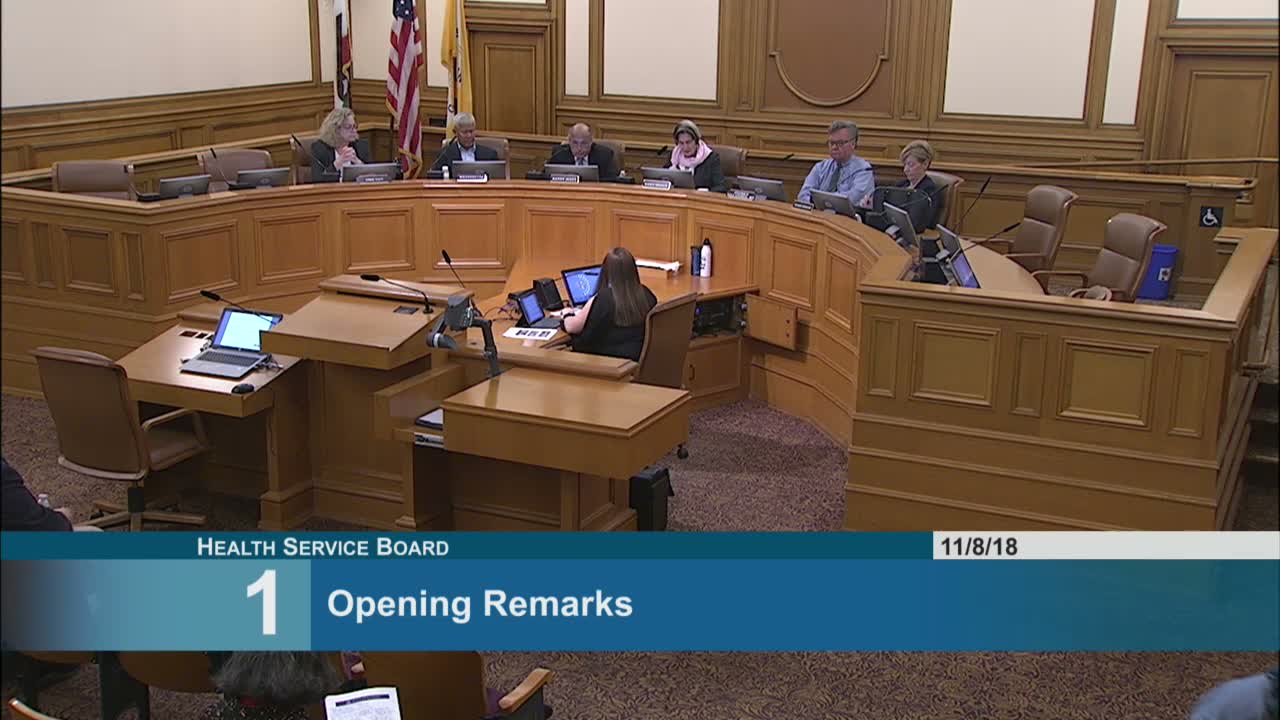
Aon presenter warns hospital consolidation is driving higher prices in Northern California
Summary
Aon consultant Mike Clark told the San Francisco Health Service Board that hospital and provider consolidation has raised prices in Northern California, citing UC Berkeley and Health Care Cost Institute data showing regional inpatient/outpatient prices 30% higher and premiums roughly 10% higher than other markets.
Mike Clark, a consultant with Aon, told the San Francisco Health Service Board that consolidation among hospitals, physician groups and payers has contributed to higher prices for services in Northern California and for San Francisco Health Service System (SFHSS) members.
Clark reviewed multiple studies and data sources and said the trend is ‘‘decades long’’ and often proactive, driven by systems seeking market share and integration. He cited a University of California–Berkeley study and other analyses reporting that inpatient and outpatient procedures in the Bay Area are roughly 30 percent higher on average and that premiums can be about 10 percent higher than comparable markets. He also noted localized market figures: ‘‘San Jose being 65% higher than the national average, San Francisco being 49% higher.’’
Why it matters: SFHSS purchases health coverage for tens of thousands of members and faces those regional pricing dynamics when negotiating contracts. Clark told the board that consolidation can widen the price gap between the largest systems and smaller hospitals and that regulatory changes and antitrust enforcement have not reversed the long-term pattern he described.
Details and supporting evidence: Clark pointed to two drivers he said influence price erosion: (1) the ‘‘prudent layperson’’ emergency-access rules that expanded hospitals’ leverage by assuring payment for emergency claims and (2) broad hospital acquisitions that import higher pricing models into new local markets. He showed charts comparing charge-master increases and net revenue growth from the late 1990s through the 2010s and said charges rose roughly fourfold from 1999 through 2016 while revenue rose about threefold.
Board response and public comment: Board members asked for specific Northern California examples and about Medicare and CMS influence; Clark said Medicare sets payment tone but hospitals manage aggregate revenue across public and commercial sources. Retiree Herbert Weiner, speaking during public comment, described consolidation as a potential ‘‘monopoly’’ that can disadvantage retirees on fixed incomes and encouraged broader civic engagement beyond the board.
What the board will do next: Clark recommended exploring value-based purchasing, strengthening collaborative relationships with provider groups and expanding purchasing power. Board members discussed follow-up research and how the data might inform SFHSS contracting and strategy.
Ending: The presentation closed with board questions and a public comment period; no formal vote or policy change was recorded on the item.