Get Full Government Meeting Transcripts, Videos, & Alerts Forever!
Get email alerts on the BlueShield Experience topic
No spam. Unsubscribe anytime.
Aon: 2017 Blue Shield claims and capitation increases drive worse loss ratio; board adds $2.4M to stabilization deficit
Summary
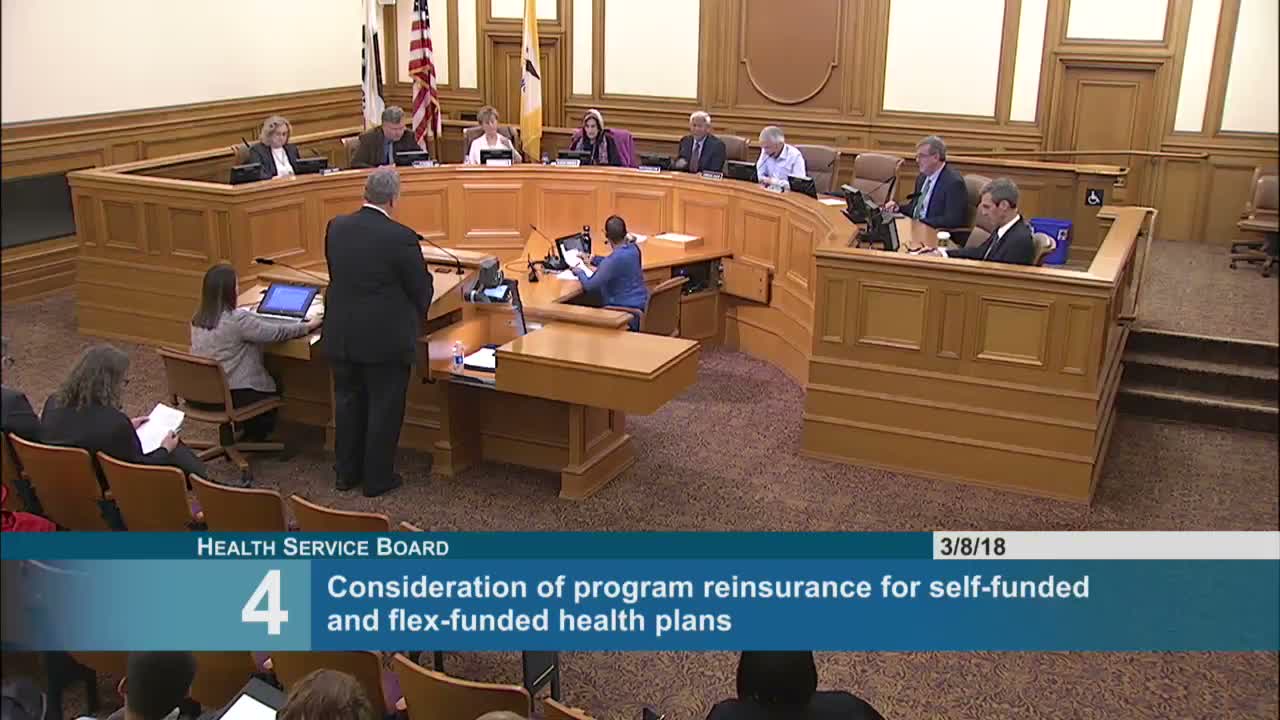
Aon told the Health Service Board that Blue Shield plan expenses rose 5.1% in 2017, pushing the loss ratio to 99.9%. The board accepted a $2,396,000 adjustment to the Blue Shield stabilization deficit and will amortize one-third ($3.16M) into 2019 rates.
Aon presented a detailed review of Blue Shield of California’s lehi-funded flex plan experience for 2017 and recommended a stabilization adjustment the board accepted on March 8.
Key findings: Aon reported total incurred plan expense per subscriber increased 5.1 percent from 2016 to 2017, while premiums rose 3.7 percent, producing a loss-ratio increase to 99.9 percent from 98.6. The actuary identified two primary unfavorable drivers: an increase in large medical claims (2017 had $6,000,000 pooled out for claimants exceeding the $1,000,000 attachment point) and a 9.8 percent rise in capitation expenses. Pharmacy costs were roughly flat on a per-subscriber basis and administrative costs declined.
Stabilization recommendation: Because the actual incurred claims exceeded the forecast by approximately $4.2–4.3 million, Aon recommended adding $2,396,000 to the prior Blue Shield rate stabilization deficit carryforward. The board voted to accept the recommendation; under the Health Service Board policy the board will apply one-third of the resulting stabilization deficit (about $3,162,001) as a buy-up to 2019 premiums.
Board discussion: Commissioners pressed for greater transparency on how Blue Shield negotiates hospital/provider rates — information that materially affects future costs but is not fully shared with SFHSS. Commissioners also discussed longer-term choices between staying self-funded or moving to fully insured arrangements and asked staff to obtain comparative proposals.
Next steps: Staff will include the stabilization adjustment in the 2019 rating forecast and continue meetings with Blue Shield to refine trend and provider-contraction assumptions for next-year rate-setting.