Get Full Government Meeting Transcripts, Videos, & Alerts Forever!
Get email alerts on the Pharmacy Formulary topic
No spam. Unsubscribe anytime.
Blue Shield proposes four-tier drug formulary; board asks for member-impact and retroactive cost analysis
Summary
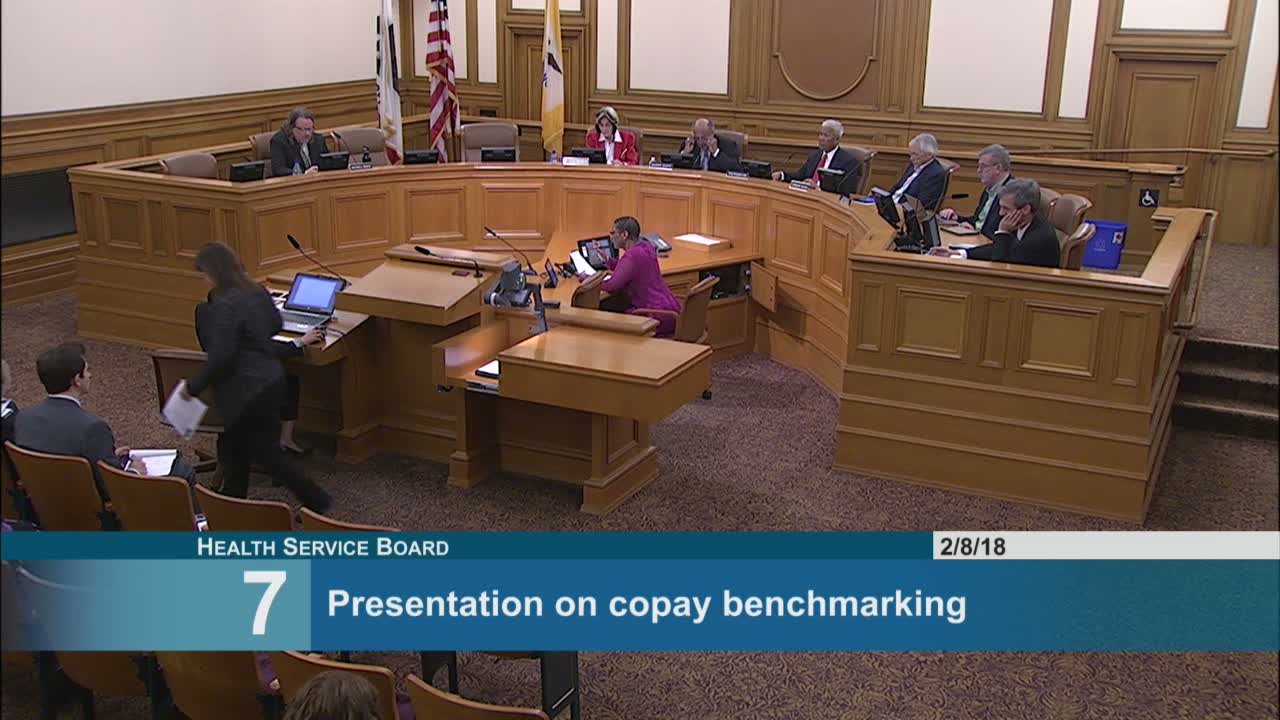
Blue Shield told the Health Service Board it plans to reorganize its drug formulary into four tiers in 2019, moving some high-cost generic drugs to higher tiers and estimating about $360,000 in savings; commissioners and public commenters asked for a clearer list of affected drugs, utilization details and a retroactive cost-impact analysis for members.
Blue Shield of California presented a proposed redesign of its outpatient drug formulary that would group medications into four tiers for the 2019 plan year and move certain higher-cost generics into higher-cost tiers.
Neil Higashida, Senior Manager of Pharmacy Services at Blue Shield, said the intent is to manage rapidly rising drug costs by aligning drug placement with clinical value and cost-effectiveness. "The new formulary tier structure will be named tiers 1 through 4," he said, explaining that tier 3 would include more expensive generics and tier 4 would capture drugs that may cost more than $600 per monthly supply.
Blue Shield's analysts identified 36 medications potentially affected by tier changes and estimated that shifting utilization toward lower-cost therapeutic equivalents could yield approximately $360,000 in savings for the HSS plan based on 2017 utilization and projected market shifts.
Board members and public commenters expressed concern about member impacts and clarity. Claire Zavonski of RECCSF called the presentation "extremely, disturbing and difficult to understand," arguing the change could confuse members and disproportionately affect early retirees and people with chronic conditions who rely on specific drugs.
Commissioners asked Blue Shield to provide: a specific list of the 36 medications, the volume and utilization by membership (including a retroactive impact analysis showing what cost differences would have been in prior years had the tiers been in effect), and details on exception or grandfathering policies for members with clinical need.
Blue Shield said the Pharmacy & Therapeutics (P&T) committee (independent physicians and clinical pharmacists) evaluates tier placement and that Blue Shield will return with additional detail and the requested impact analysis. Several commissioners urged the vendor to produce a member-level impact estimate before changes take effect.
Outcome: Board received the presentation, asked Blue Shield for a detailed list of impacted drugs and a retrospective cost-impact analysis, and requested communications plans and any proposed grandfathering or exception mechanisms.