Get Full Government Meeting Transcripts, Videos, & Alerts Forever!
Get email alerts on the Opioids topic
No spam. Unsubscribe anytime.
HSS analysis finds high opioid use concentrated among older members; board calls for MME tracking and education
Summary
The San Francisco Health Service System presented APCD-based opioid findings showing about 11% of members received opioids and a small subset met a high threshold for potential misuse; staff recommended stronger MME monitoring, provider checks of the CURES database and expanded member education.
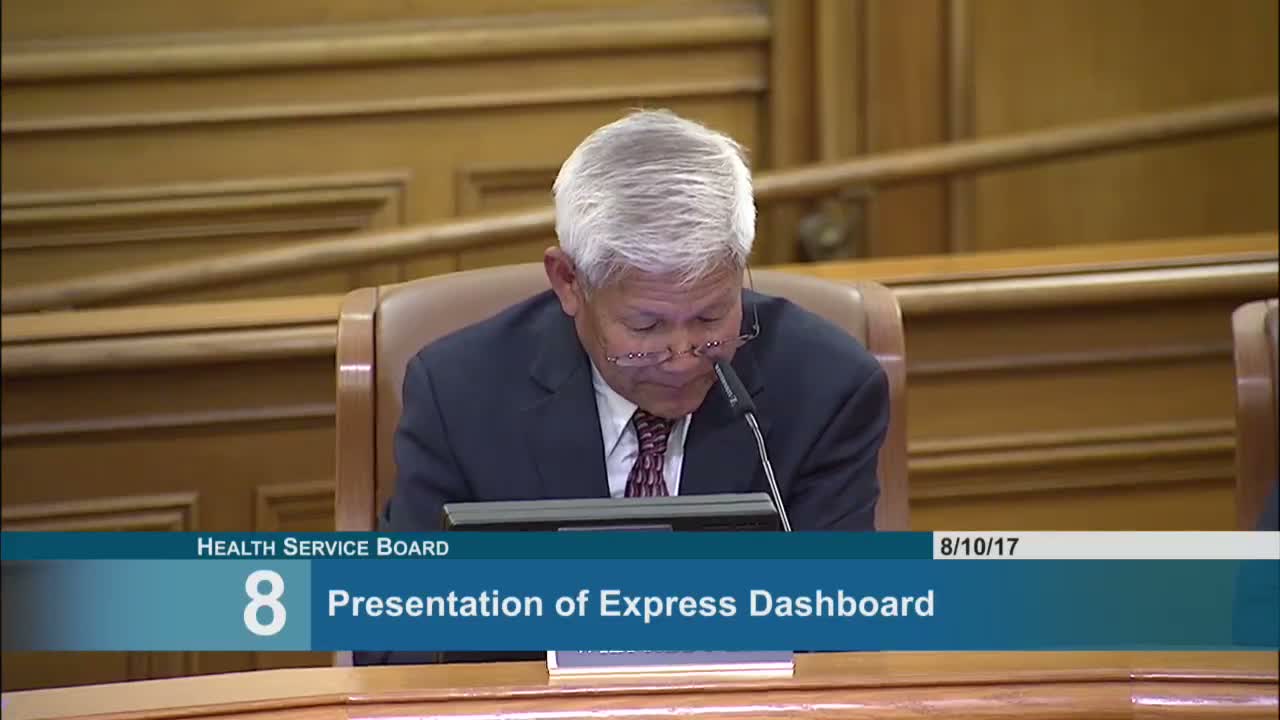
Marina Coleridge, manager of Enterprise Systems and Analytics at the Health Service System, told the board the department’s study of 2014–2015 All Payer Claims Database records shows roughly 11% of adult members received opioid prescriptions, and opioid prescriptions accounted for about 2% of the total pharmacy spend.
The analysis used a conservative threshold — recipients with more than a 450-day supply in a year — to flag potential misuse and found about 2.1% of members met that criterion. Coleridge said the population with patterns of prolonged opioid supply is disproportionately older: “the majority ... are certainly those that are 50 and older,” and those members also show higher risk scores and more complex diagnoses such as degenerative joint disease.
Coleridge reviewed limitations and next steps: the APCD lacked morphine-milligram-equivalent (MME) data for this analysis, so staff recommended adding MME calculations where feasible, asking health plans to incorporate prescribing guarantees into contracts with HSS, and expanding pain-management and addiction-access programs. She also flagged a safety concern: “within 30 days of discharge for opioid misuse, we also saw a prescription for benzodiazepine,” a combination that raises the risk of respiratory depression.
Commissioners pressed for operational detail. One suggested triggers that require health-plan outreach — for example, automated alerts tied to prescribing patterns — and asked plans to document what triggers access to treatment. Coleridge said Blue Shield’s narcotic-safety initiative and other plan programs are already doing some of that work and HSS will invite plans to an educational forum in November to present their interventions.
Public commenter Dennis Kruger (active-retired firefighters) asked about medications or programs to help members taper off opioids and return to work; the board acknowledged the need for treatment pathways including medication-assisted therapies and shorter initial prescriptions to reduce leftover pills.
What’s next: staff will refine the analysis with 2016 data where available, pursue MME metrics with vendors and health plans, and include plan representatives in the board’s planned educational forum.
The presentation concluded with commissioners endorsing continued monitoring and asking for follow-up reporting at a future meeting.