Get Full Government Meeting Transcripts, Videos, & Alerts Forever!
Get email alerts on the Open Enrollment topic
No spam. Unsubscribe anytime.
HSS credits staff as record open enrollment strains phones and systems
Summary
Health Service System leaders told the board Dec. 8 that 2016 produced the busiest open enrollment in a decade: call volume and in‑person visits rose sharply, volunteers and temporary staff helped process roughly 10,700 paper applications, and staff added system codes and vendor interfaces to manage a new split‑family enrollment structure.
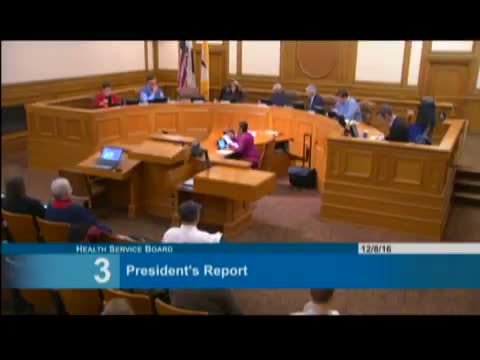
Director Catherine Dodd told the Health Service Board that the system handled its busiest open enrollment in at least 10 years, citing major outreach and operational work across communications, analytics and benefits administration.
"We sent out over 73,000 open enrollment letters and 73, almost 75,000 confirmation letters," Dodd said, and thanked staff and temporary workers who supported an intense public‑facing period. Dodd highlighted coordinated events that combined flu clinics with enrollment assistance and noted more than 4,100 flu shots were given during the season.
Chief Operating Officer Mitchell Griggs presented operations data showing October inbound calls near 10,000 (about a 30 percent increase year‑over‑year), a speed‑of‑answer close to the 30‑second target, and an abandonment rate of about 2.2 percent. In‑person assistance at HSS and off‑site events produced more than 5,200 signed attendees and roughly 22,200 member sign‑ins across open‑enrollment activities.
Griggs said the HSS handled about 10,700 paper applications and processed the bulk of them by Nov. 16, and that voluntary benefits offered in 2017 — including critical illness, accident and supplemental life — produced about 4,600 enrollments. Data analytics and configuration work required extensive PeopleSoft updates to accommodate 44 separate benefit programs and a new "split family" situation in which one family member rolls to Medicare while another remains in a non‑Medicare plan.
Data Analytics Manager Marina Kollerich described the technical lift: new coverage codes were added, interface files with vendors were adjusted and testing and audit steps were run to ensure members received correct ID cards and payroll deductions. Kollerich said about 12,000 members were migrated into new plan structures and that the work touched many downstream systems and outside employers that receive interface files.
Board members and RECCSF, a retiree constituency group, praised staff for the outreach and heavy workload; public comment from RECCSF's Claire Zavonsky also raised a small number of reports that some physicians had not yet agreed to accept the new UnitedHealthcare Medicare plan, a matter HSS and UnitedHealthcare said they would track and address.
Looking ahead, Dodd said HSS will continue operational follow‑up, weekly escalations with UnitedHealthcare for retiree issues and further analytics to monitor enrollment accuracy and provider acceptance.