Get Full Government Meeting Transcripts, Videos, & Alerts Forever!
Get email alerts on the MACRA topic
No spam. Unsubscribe anytime.
PBGH explains MACRA: MIPS default, APMs offer bigger rewards for risk‑bearing providers
Summary
The Pacific Business Group on Health summarized MACRA’s Quality Payment Program: the default MIPS track ties modest upside or downside payments to quality, health‑IT and cost measures, while Advanced Alternative Payment Models offer larger incentives for providers who accept downside risk; 2017 was framed as a transition year.
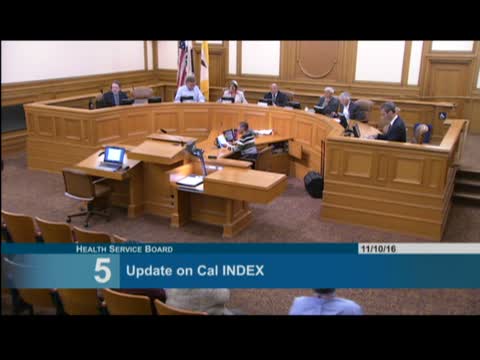
Stephanie Glier of the Pacific Business Group on Health gave the board an overview of the Medicare Access and CHIP Reauthorization Act of 2015 (MACRA) and the Quality Payment Program it requires.
Glier explained that MACRA replaced the Sustainable Growth Rate and moves Medicare physician payment toward value by tying bonuses and penalties to performance. Providers can participate in either the merit‑based incentive payment system (MIPS), the default track where performance across quality, practice improvement, advancing care information (health IT), and cost determines modest payment adjustments, or in an Advanced APM track that offers larger bonuses to clinicians who take on downside financial risk and meet minimum volume thresholds.
She emphasized that 2017 serves as a transition year with multiple participation options to avoid immediate payment cuts, and that the program builds on existing reporting programs so many practices already have partial experience. Glier said the program aligns Medicare incentives with broader private‑sector movement to value‑based payment and that San Francisco providers – many of whom already participate in ACOs or similar models – are relatively well positioned to pursue advanced‑APM opportunities.
Commissioners asked about administrative burden for smaller practices and the likelihood of clinicians leaving Medicare; Glier said CMS has resources and transition options aimed at reducing reporting burdens and that historical evidence does not show mass provider exodus under similar reforms.