Get Full Government Meeting Transcripts, Videos, & Alerts Forever!
Get email alerts on the Fiscal Policy topic
No spam. Unsubscribe anytime.
Board will use portion of stabilization reserve to limit 2017 rate spikes, approves 50% buy‑down of remaining balance
Summary
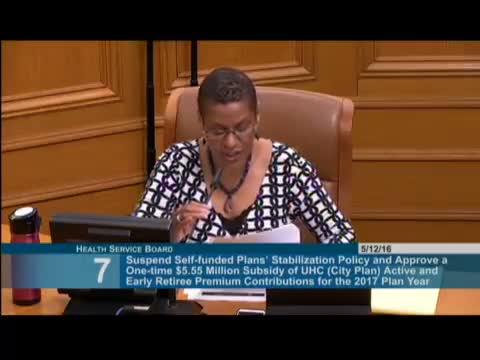
After detailed debate over affordability and fiscal sustainability, the Health Service System board voted to apply half of the remaining stabilization reserve to reduce 2017 city‑plan premium increases and suspended the stabilization policy to allow the adjustment.
The board voted to use a portion of the city‑plan claim stabilization reserve to reduce projected premium increases for actives and early retirees in 2017, selecting a compromise approach after extended discussion about long‑term sustainability.
Aon Hewitt presented the city‑plan self‑funded experience and recommended a $5,550,000 one‑time subsidy from the stabilization reserve to buy down rates for 2017. The actuary explained the recommendation would keep increases in line and reduce the risk of member migration that can occur when premiums rise sharply. The actuary also reported the stabilization reserve balance and a separate contingency reserve (IBNR/solvency funds) and emphasized the board’s discretion in deploying surplus monies for plan stability.
Several commissioners, including Commissioner Sass, warned that drawing the full $5.55M would leave an insufficient cushion for future years and proposed a smaller, phased approach. After debate, the board adopted an amended motion to buy down 50% of the remaining stabilization reserve and leave the other half for 2018. That amended motion passed 4–2 on roll call. The board subsequently voted unanimously to suspend the stabilization fund policy (a procedural step required under the agenda) to enable the change; the actuary was directed to return with recalculated rate tables reflecting the board’s motion at the next meeting.
Supporters said the buy‑down will help preserve enrollment by keeping premiums affordable for populations without alternative carriers, particularly early retirees with non‑Medicare dependents. Opponents warned that reducing the reserve now could leave little room to respond if claims trend unfavorably in 2018 and urged more conservative use of surplus.
Next steps: Aon Hewitt will produce recalculated rate tables for the next meeting that apply the board’s 50% buy‑down instruction; staff will present updated member notices and the final retiree rate schedule at the June meeting.