Get Full Government Meeting Transcripts, Videos, & Alerts Forever!
Get email alerts on the Pharmacy Drugs topic
No spam. Unsubscribe anytime.
Board hears warnings on specialty drugs as share of pharmacy spend grows
Summary
Aon consultant Paige told the board specialty drugs now account for nearly 30% of drug spend and could exceed 50% of drug trend in 3–5 years; commissioners pressed for clearer charting, explanation of rebates and site‑of‑care costs and the implications for rate setting.
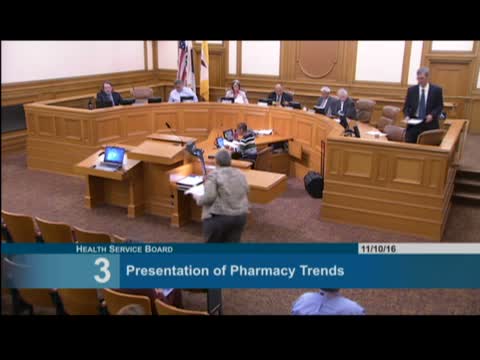
An Aon consultant summarized national and local pharmacy trends, telling the Health Service Board that the growth in specialty drug spending is shifting how employers and plans must manage pharmacy benefits.
“Specialty drugs usually are used by about 1 to 2 percent of the population, but they now account for almost 30% of drug costs,” the presenter said, and projected that in the next three to five years specialty drugs could exceed 50% of drug trend. The consultant added that specialty‑drug growth is expected to outpace traditional drug increases (worst‑case specialty growth cited near 20% year‑over‑year in some vendor reports).
She noted compliance and administration challenges: roughly 31.5% noncompliance among patients treated for hypertension was offered as an example of adherence problems, and hepatitis C therapies were used to illustrate the paradox of dramatic clinical benefit with very high costs (presenter cited an $84,000 treatment cost and high cure rates). The presenter also reviewed drivers such as new indications, limited biosimilar savings (estimated 10–25% versus historic generic declines of 75–85%), and manufacturer rebates that change formulary incentives.
Commissioners asked technical questions about graph legends, midpoint vs. range presentation and the compounding effect of annual increases. Board members called the presentation a useful background piece for the upcoming rate‑setting process and asked consultants to tie these trend projections into actuarial rate work.
No board vote was held; members asked for the pharmacy trends to inform the rates and benefits work later in the year.