Get Full Government Meeting Transcripts, Videos, & Alerts Forever!
Get email alerts on the Pharmacy And Excise Tax topic
No spam. Unsubscribe anytime.
Board hears specialty-drug pressure and a projected excise-tax swing from blending retirees
Summary
Aon and plan representatives reported specialty drugs are a growing share of pharmacy spend (Blue Shield ~26%, Kaiser ~31%), and Aon's excise-tax update showed that federal blending guidance could reduce San Francisco's 2018 excise-tax exposure from roughly $11.8 million to approximately $465,000 under their assumptions.
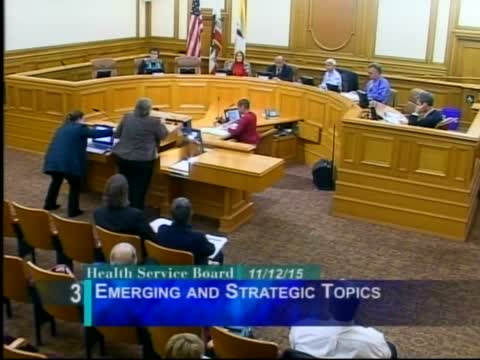
Board members were briefed on two topics with major budget implications: the rapid rise of specialty-drug spending within pharmacy and an updated excise-tax projection that depends heavily on federal guidance on "blending" retiree pools.
Paige Sipes Metzler (Aon) said specialty drugs already represent a substantial and growing share of pharmacy spending: she reported Blue Shield's specialty spend at about 26.2 percent and Kaiser's near 31 percent for overlapping reporting windows, concentrated among a tiny share of members (conditions such as multiple sclerosis, cancers, hepatitis C). She explained carriers use different tier structures (Kaiser two tiers with low copays; Blue Shield four tiers currently, considering a fifth tier for specialty) and that plan sponsors face choices about cost-sharing parity across plans.
Veil Kosher (Aon Hewitt) updated the Board on the excise-tax modeling for 2018. He said that if federal guidance allows "blending" early retirees with Medicare retirees, the Board's estimated 2018 excise-tax liability would be about $465,000 (including FSA elections); without blending and including FSAs, the model projects about $11,809,000 in excise tax under the stated assumptions. Kosher warned that guidance remains pending and that final rules could change outcomes.
Commissioners asked for dollar totals behind percentage metrics and for more granular prescription counts; presenters agreed to provide supplementary figures and to return with blended and non-blended scenarios side-by-side as guidance becomes available. The Board did not take formal action; staff were asked to include excise-tax impacts alongside rates and benefits materials when the Board reviews renewals.