Get Full Government Meeting Transcripts, Videos, & Alerts Forever!
Get email alerts on the Market Trends topic
No spam. Unsubscribe anytime.
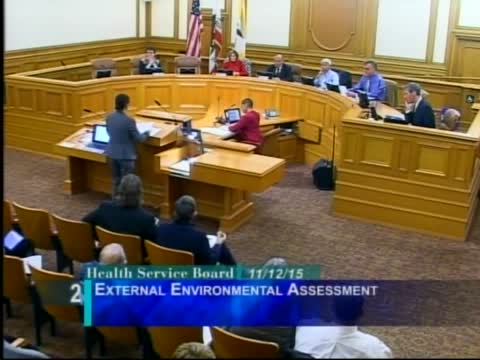
Aon Hewitt tells Health Service Board consolidation and excise-tax risk are top near-term concerns
Summary
Aon Hewitt presented four market forces affecting benefits — the looming excise tax, health-tech investment, demographic/workforce change, and provider consolidation — and said ACOs show mixed early evidence; commissioners pressed on ACO effectiveness and regional market implications.
Aon Hewitt presenters told the San Francisco Health Service System Board that consolidation among carriers and providers, combined with technology and demographic shifts, will shape plan strategy over the next one to two years.
Juan Anderson (Aon Hewitt) opened the presentation saying "there's 4 key things that are happening in the marketplace today" and described them as the excise tax, venture/investment in health technology, a changing multi-generational workforce, and expanded access to public exchanges. He said about "two thirds" of plan sponsors expect to hit the excise tax threshold in 2018 unless plan design changes are made.
Anderson also discussed provider payment reform and accountable care organizations (ACOs) as potential pathways to move from volume to value, noting that while some ACOs are showing utilization and quality improvements, the dataset is still early and it is "way too early to tell" whether ACOs deliver broad cost savings. He highlighted Bay Area market structure: significant commercial enrollment with Kaiser Permanente, Anthem, and Blue Shield holding meaningful shares.
Commissioners pressed on regional variation, primary care support, and whether consolidation typically reduces cost to consumers. Anderson and Aon colleagues acknowledged consolidation often does not produce early cost reductions for consumers and urged the Board to consider local provider relationships and transparency efforts (APCD) as tools to steer toward higher-value care.
The Board received the briefing as educational; no formal action was taken. Staff were asked to consider how the Board's purchasing leverage, local ACO participation, and APCD-based transparency tools could be used in future procurement and benefit-design discussions.