Get Full Government Meeting Transcripts, Videos, & Alerts Forever!
Get email alerts on the Pharmacy Trends topic
No spam. Unsubscribe anytime.
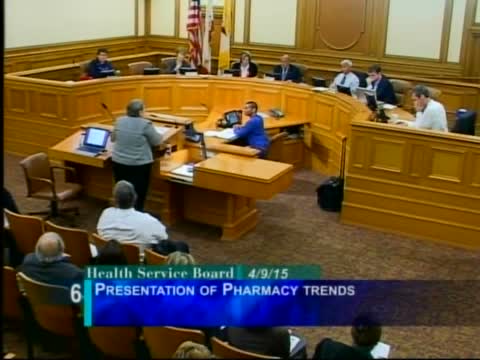
Board hears warning on specialty drugs: hepatitis C and new classes could sharply raise pharmacy spend
Summary
Aon Hewitt presented pharmacy trend analysis showing specialty drugs are a growing share of pharmacy spend (approx. 26%) and cited hepatitis C drugs as an example of rapid cost growth; the board requested plan‑specific dollar estimates and follow‑up reporting.
Board members heard a data‑driven briefing on pharmacy trends, with a focus on specialty drugs and pipeline therapies likely to increase near‑term pharmacy spend.
Dr. Paige Sipes Metzler (Aon Hewitt) told the board that specialty drugs accounted for roughly one‑quarter of pharmacy dollars while representing a very small share of prescriptions. Hepatitis C drugs were cited as a concrete example: therapies approved in late 2013 (sofosbuvir, ledipasvir/sofosbuvir) produced major one‑time cost spikes — the plan paid over $3 million on hepatitis C drugs in 2014 and had already incurred more than $1 million in early 2015. Dr. Sipes Metzler noted list‑price examples in the market (roughly $84,000–$94,500 per 12‑week course for certain regimens) and said that although these regimens can be curative, they represent a concentrated cost driver.
She reviewed other trends: emergence of biosimilars (longer‑term savings potential), new chronic‑use specialty classes (PCSK9 inhibitors for cholesterol, SGLT2 agents for diabetes), compounded medication pricing shifts, and pressures on generics due to consolidation and shortages. The presenter recommended strategies: foster competition, improve utilization management and adherence, adopt value‑based payment or coverage rules, shift site‑of‑care to the lowest‑cost appropriate setting, and increase cost transparency.
Board members asked staff and vendors to return with plan‑level dollar estimates (Blue Shield and Kaiser) showing what specialty drug spending represents in dollars for HSS membership and to show how proposed pharmacy edits would affect high‑risk medication users. The presenter agreed to provide those figures at a follow‑up meeting.
Next steps: staff and the actuary will produce plan‑specific pharmacy spend breakdowns and analysis of the impact of high‑cost specialty therapies on trust finances.