Get Full Government Meeting Transcripts, Videos, & Alerts Forever!
Get email alerts on the Risk Adjustment topic
No spam. Unsubscribe anytime.
Aon Hewitt narrows risk‑score gap between plans but commissioners warn about interpretation
Summary
Aon Hewitt presented updated risk‑score work showing the Kaiser‑Blue Shield differential narrowed when measured on medical diagnosis rather than pharmacy use; commissioners cautioned that concurrent risk scores reflect utilization (hospital admissions) and management quality as much as underlying patient risk.
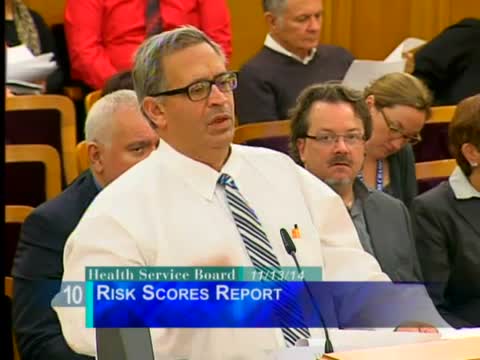
Aon Hewitt presented to the Health Service Board on Sept. 11 an updated analysis of plan risk scores after requests by the board and plan vendors. The consultant said earlier pharmacy‑based scoring showed about a 15 percent spread between plan pools; rerunning the analysis on a medical‑diagnosis basis reduced that spread to roughly 10 percent (concurrent risk scores: ~1.17 for Blue Shield, ~1.08 for Kaiser on combined active and early‑retiree populations).
Consultants and commissioners spent much of the discussion probing methodology and implications. Commissioners emphasized a core limitation: the concurrent risk score methodology used in the analysis incorporates utilization data (for example, hospital admissions) so that a population whose care avoids admissions can show a lower score even if underlying diagnoses are similar. Board members warned against a straightforward translation from risk score differentials to premium differences without adjusting for differences in medical management and utilization patterns.
Aon Hewitt recommended continued annual measurement and further analysis to separate utilization effects and to inform any risk‑adjustment or rate‑setting discussions. Commissioners asked staff to include clearer context and purpose in future materials so the public and board can better understand how risk scores would affect rate setting or contract negotiations.