Get Full Government Meeting Transcripts, Videos, & Alerts Forever!
Get email alerts on the Counterculture Context topic
No spam. Unsubscribe anytime.
Commission adopts Counterculture (1965–1975) Historic Context Statement to guide citywide survey
Summary
The commission adopted a citywide Counterculture Historic Context Statement focusing on the hippie counterculture and nine thematic contexts (diggers, communes, clinics, Huckleberry House, etc.). Staff and public historians emphasized the document’s role as a living tool for identifying resources and informing potential districts.
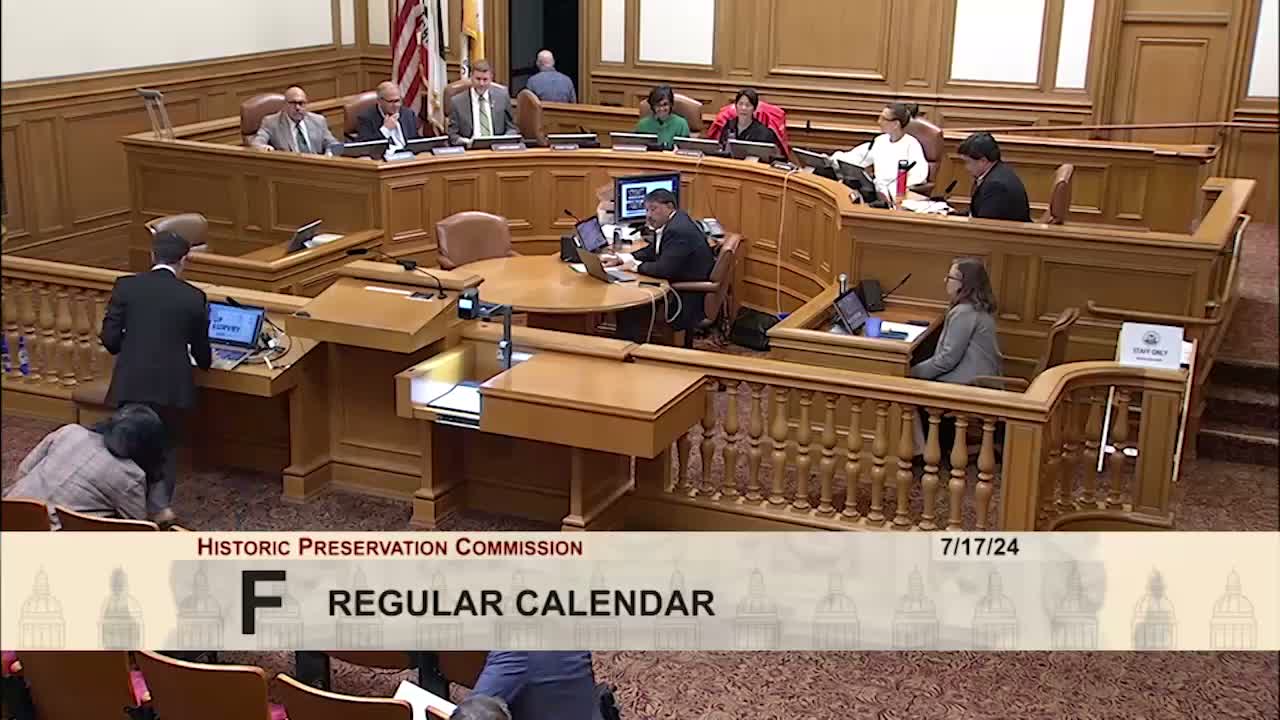
The Historic Preservation Commission unanimously adopted a citywide Counterculture Historic Context Statement that documents the social, cultural and material traces of San Francisco’s 1965–1975 counterculture era.
Planning staff presented the statement and public historian Donna Graves summarized the study’s scope, explaining it focused on the 'hippie counterculture' subcontext and identified nine contexts of significance, including the Diggers, communes, free stores, the Haight-Ashbury Free Clinic, Happening House and Huckleberry House. Graves highlighted research findings about short-lived but influential sites and institutions; she noted the Haight-Ashbury Free Clinic served 12,000 patients in its first month and that Huckleberry House helped shape federal policy that became the 1974 Runaway Use Act.
Speakers from neighborhood organizations praised the scholarship while urging expansion on topics such as the role of Golden Gate Park, the Panhandle and the fight against the proposed Panhandle Freeway. Commissioners described the document as a living resource that can be augmented with further research and community input. After discussion on the period of significance and potential next steps for survey work, the motion to adopt the context statement carried 7–0.
Planning staff said the context statement will feed into the broader citywide cultural resources survey and can help inform future nominations, district explorations and preservation planning.