Get Full Government Meeting Transcripts, Videos, & Alerts Forever!
Get email alerts on the Planning Code topic
No spam. Unsubscribe anytime.
Commission backs mayor's Small Business Recovery Act, expanding Prop H 30-day permits citywide
Summary
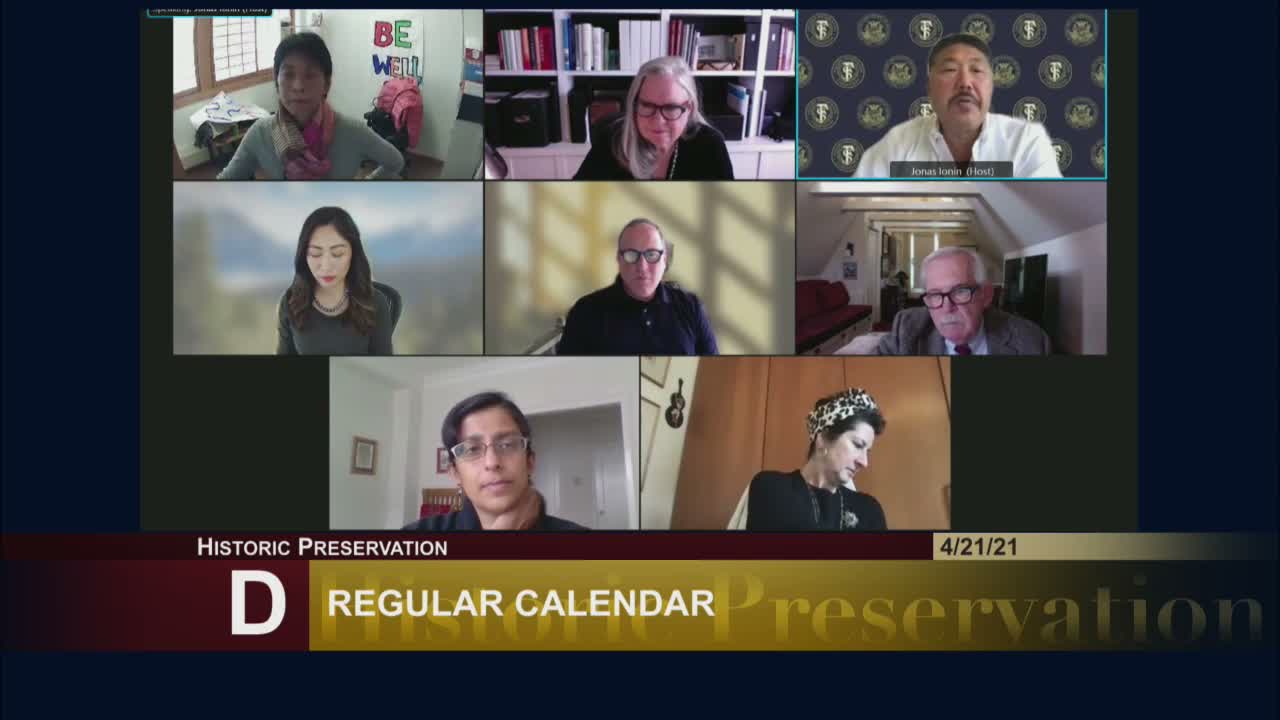
The Historic Preservation Commission voted unanimously April 21, 2021, to forward a modified recommendation supporting the mayor's Small Business Recovery Act. Staff said the package would expand Proposition H's 30-day permit processing, relax certain notice and abandonment rules, and add temporary measures to help arts venues and rooftop uses recover from the pandemic.
The San Francisco Historic Preservation Commission voted unanimously April 21 to forward a modified recommendation supporting the mayor's proposed Small Business Recovery Act, a package of Planning Code and related police-code changes intended to speed reopening and reduce regulatory barriers for neighborhood businesses.
Planning staff said the ordinance would expand benefits created by Proposition H by applying 30-day processing for principally permitted ground-floor uses to additional zoning districts, including mixed-use downtown areas. "This ordinance will expand the prop h guarantees to process permits for principally permitted businesses on the ground floor within 30 days of application submission," Sheila Nicholas, planning staff, said during the April 21 presentation.
Staff told commissioners the change aims to reduce costs and uncertainty for applicants and free up staff time. To implement the expedited review, staff said the Department of Building Inspection and other agencies (DPH, Fire, PUC, Public Works) would follow an operational, coordinated review process. Liz Waddy, director of current planning, said the recommendation to eliminate a separate notice requirement was intended to avoid redundant steps: "Part of our goal with the recommendation of eliminating the notice is that should somebody want to appeal the admin or the minor, it's the same appeal body as the building permit itself."
Other elements described by staff include removing an abandonment clause that could force a business to repeat a conditional-use process after a multi‑year vacancy; simplifying retail-use definitions (folding niche categories such as cat boarding and instructional services into broader retail or personal-service definitions); allowing certain rooftop and outdoor operations subject to health, safety and egress rules; and permitting accessory dwelling units (ADUs) at the rear of mixed-use commercial properties provided a minimum 25-foot commercial frontage remains at the street.
The package also contains provisions aimed at arts and entertainment venues: temporary outdoor entertainment and temporary structures for up to two years, a new Planning Code section to continue an emergency "music/jam" permit, a three-year conditional-use (CU) removal safeguard for nighttime entertainment to guard venues from permanent loss, and police-code adjustments to allow single, unamplified performers until 10 p.m. and to extend limited live-performance hours to 11 p.m.
Commission discussion focused on which parts of the package are permanent versus temporary, appeal windows for administrative certificates, and the single historic-preservation item that would be affected. Commissioners praised the ordinance's potential equity impacts; staff cited early Prop H results showing high utilization and noted that 42% of applicants in a recent month were women-owned businesses. Laurel Arvanitidis of the mayor's office described the measure as building on voter-approved Prop H and city economic-recovery work.
A motion to approve a modification of the staff recommendation was offered and seconded; a roll-call vote followed and the commission approved the recommendation unanimously, 7-0. The commission will forward its recommendation to the Planning Commission and, as appropriate, the Board of Supervisors for next steps.