Get Full Government Meeting Transcripts, Videos, & Alerts Forever!
Get email alerts on the Historic Resources topic
No spam. Unsubscribe anytime.
Draft EIR for Potrero Power Station signals unavoidable historic-resource losses; commission urges stronger preservation
Summary
City staff and the project sponsor presented the Potrero Power Station draft EIR for a 29-acre Central Bayside redevelopment that could deliver up to 5.4 million gross square feet. Staff found demolition of multiple brick-era buildings would cause significant and unavoidable impacts to the Third Street Industrial District; community speakers and commission members pressed for full preservation alternatives and clearer adaptive-reuse commitments.
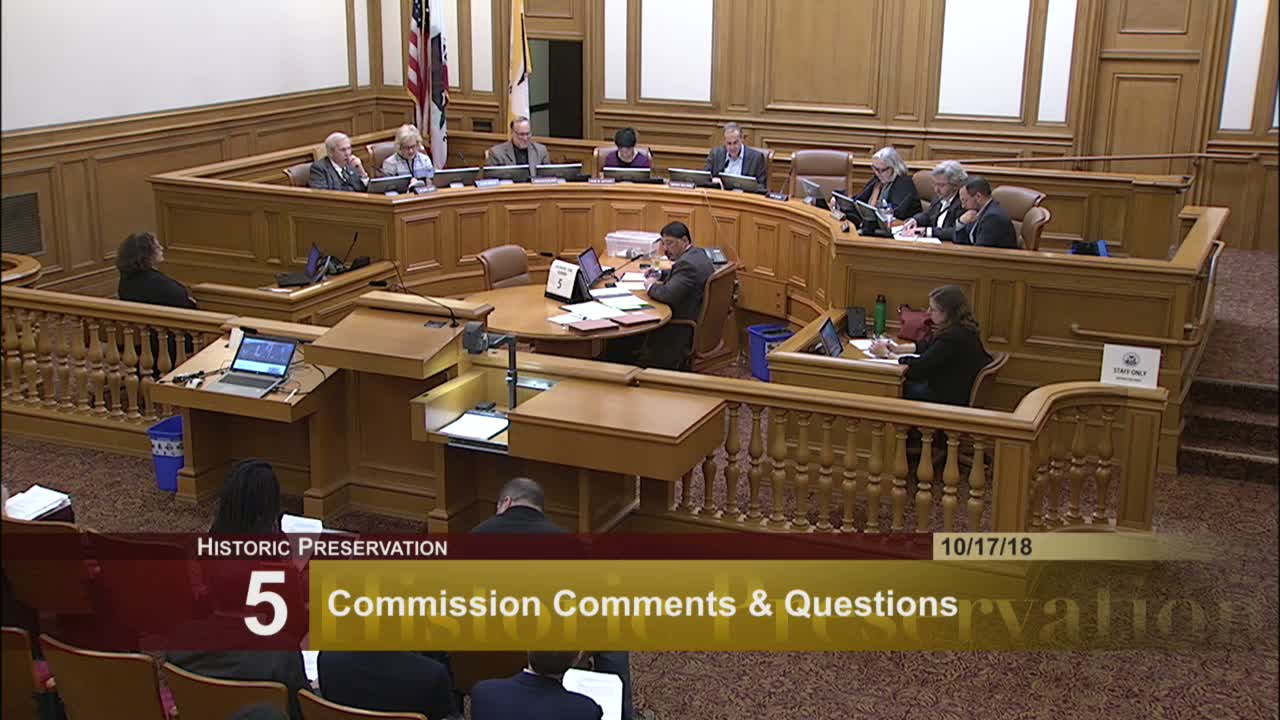
San Francisco planning staff and the project sponsor on Oct. 17 presented the draft Environmental Impact Report (DEIR) for the Potrero Power Station, a proposed mixed-use redevelopment on roughly 29 acres of the Central Bayside waterfront that would include up to 5,400,000 gross square feet of new development.
Rachel Schutt, the Planning Department’s environmental review coordinator, told the Historic Preservation Commission the site lies largely within the Third Street Industrial District, which state staff found eligible for the California Register, and that the DEIR identifies three project-level and one cumulative significant, unavoidable impacts to historic resources tied to demolition of several individually eligible brick buildings (Station A, the Meter House and the Compressor House). The draft EIR assumes Unit 3 would not be retained for the purposes of the historic-resources impact analysis, Schutt said.
Kristen Hall, an urban designer for the project sponsor, said the sponsor is studying how to incorporate district character and historic structures into the project. The sponsor’s design controls and mitigation approach include a Historic American Buildings Survey (HABS)-level documentation program, construction vibration monitoring, salvage of materials of interest, permanent interpretive displays and a preservation plan for the 300‑foot boiler stack. Hall described options under consideration, including rehabilitation of the stack and a study of whether Unit 3 could be repurposed for hotel use.
Community speakers pushed for stronger retention. "Full loss of Station A, the Gate House, the Meter House and the Compressor House would remove all tangible association with that history," said Peter Linenthal of the Potrero Hill Archive, urging priority for preserving the cluster of brick buildings. Mike Bueller of San Francisco Heritage said the sponsor has explored adaptive uses but the DEIR’s baseline that assumes none of the site’s historic resources will be retained (except the stack) makes it hard for preservation groups to evaluate feasibility.
Friends of the Dogpatch Hub president JR Eppler and architect Philip Anasovich both urged alternatives that retain substantial portions of the historic fabric. Eppler cited meeting results that estimated a minimum of $10,000,000 would be required for a bare-bones adaptive reuse of the most deteriorated buildings and described secured seed funding for the neighborhood group: a $4,200,000 leadership grant from UCSF, $2,500,000 from Pier 70 and the Port of San Francisco, and $250,000 from Supervisor Malia Cohen to protect and secure the Potrero Police Station site.
Commissioners pressed staff on the assumptions behind the analysis and emphasized the public experience at street level. Commissioner Perlman said Alternative C (a full-preservation alternative that retains identified resources while keeping similar total residential square footage by adding additional height) “is an incredibly reasonable potential exchange” between floor area and historic retention. Commissioners also stressed that mitigation consisting of archival materials or videos would be insufficient substitute for in-place preservation and urged the Planning Commission to consider projects that preserve historic contributors where feasible.
Next steps: the public review period for the DEIR began Oct. 4 and runs through Nov. 19, 2018; a public hearing before the Planning Commission is scheduled for Nov. 8. Schutt said comments submitted orally at the Nov. 8 Planning Commission hearing or in writing to the Planning Department by 5 p.m. on Nov. 19 will be considered in the final EIR. The Planning Department will publish a response-to-comments document after the Planning Commission hearing, followed by certification of the final EIR at a later hearing.