Get Full Government Meeting Transcripts, Videos, & Alerts Forever!
Get email alerts on the Alcatraz Piers 31 33 topic
No spam. Unsubscribe anytime.
Port and NPS present Pier 31–33 plan for Alcatraz embarkation; mitigated negative declaration under appeal
Summary
Port preservation staff and National Park Service representatives presented design and historic‑resources findings for a proposed 50‑year lease and improvements at Piers 31–33 to support Alcatraz visitor services. Cultural review found no adverse effect and the project qualified for a mitigated negative declaration; planning appeals on ferry service to Fort Baker were noted.
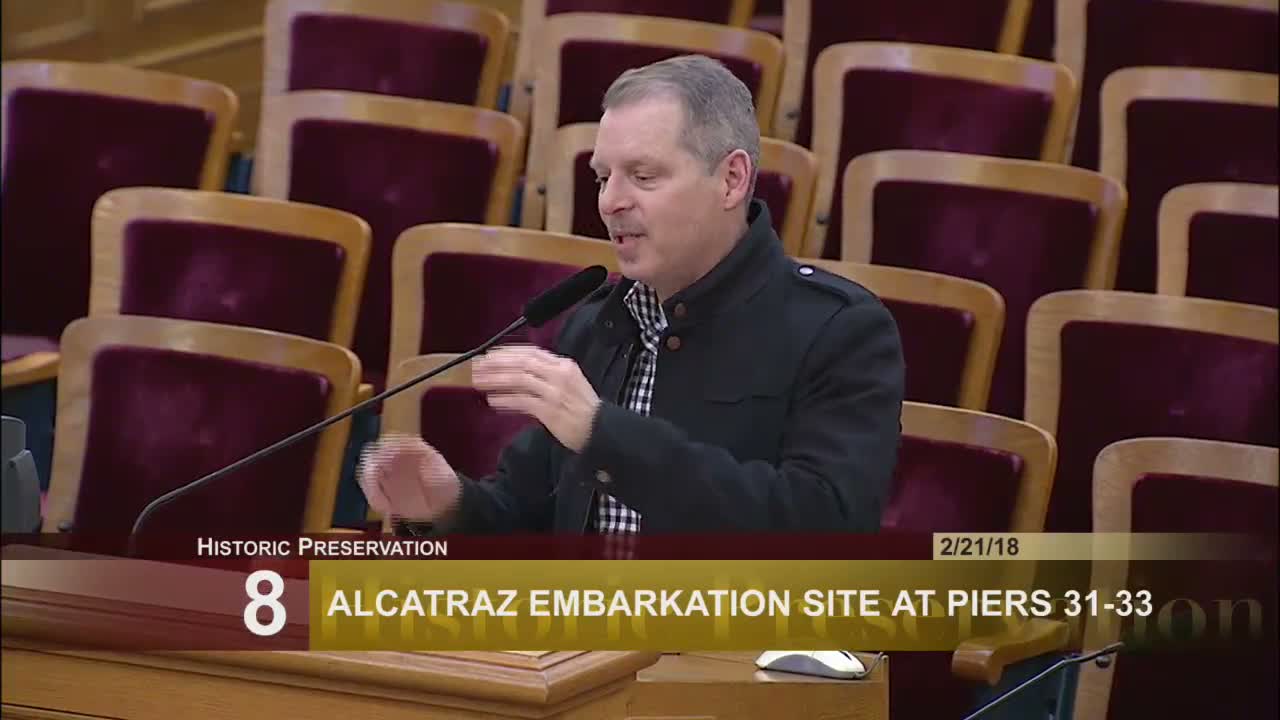
Port of San Francisco and National Park Service representatives briefed the Historic Preservation Commission Feb. 21 on proposed long‑term improvements at Piers 31 and 33 to create a higher‑quality Alcatraz embarkation site.
Mark Paez, preservation coordinator for the Port, said the Port proposes a 50‑year lease with the National Park Service to provide permanent ferry and visitor facilities at Piers 31 and 33 and associated seawall and bulkhead wharf improvements. He said planners expected to complete environmental review and that the project qualified for a mitigated negative declaration; that determination was being appealed to the Planning Commission on concerns about potential ferry service to Fort Baker.
Steve Haller, formerly chief of cultural resources at the Golden Gate National Recreation Area, described the design: replacement of a single dock and gangway with two parallel floating docks and a third berth to allow limited weekend ferry service to Fort Baker; rehabilitation of pier sheds to restore historic openings and visibility; and carefully scaled canopies and transparent queuing systems with interpretive glass panels to minimize visual impact. "This project seeks to preserve, protect, and celebrate the original fabric," Haller said, adding that the State Historic Preservation Office concurred that there was no adverse effect.
Commissioners asked about canopy scale, interpretive content and coordination with BCDC and city planning. Brian Aviles, GGNRA chief of planning, and Port staff said the canopy design was revised after multiple evaluations to make the structures smaller and more transparent; interpretive panels and orientation retail were included in the program. Port staff said proposed Fort Baker service would run two ferries on Saturday and two on Sunday, with a per‑vessel cap of about 200 visitors, generating roughly an additional 40,000 visitors annually for that service if implemented; planning staff concluded the additional trips would be less than significant for impacts cited in the appeal.
This presentation was informational; no action was required by the Historic Preservation Commission. If the Planning Commission upholds the mitigated negative declaration, the Port Commission is scheduled to consider CEQA findings and project approval; further appeals could affect schedule and effectiveness of any Port Commission action.