Get Full Government Meeting Transcripts, Videos, & Alerts Forever!
Get email alerts on the Infrastructure Environmental Review topic
No spam. Unsubscribe anytime.
Historic preservation commission finds SFPUC draft EIR adequate but notes unavoidable impacts to central shops
Summary
The San Francisco Historic Preservation Commission reviewed the draft EIR for the SFPUC’s biosolids digester facilities project at the Southeast Wastewater Treatment Plant and agreed the EIR is adequate for comment while finding impacts to historic resources would remain significant and unavoidable; commissioners urged documentation and an interpretive display as mitigation.
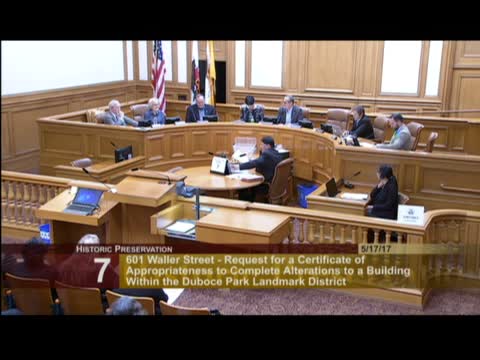
SAN FRANCISCO — The San Francisco Historic Preservation Commission on May 17 reviewed the draft Environmental Impact Report for the San Francisco Public Utilities Commission’s biosolids digester facilities project at the Southeast Wastewater Treatment Plant and concluded the document is adequate for the planning process while noting demolition of historic central shops would cause ‘‘significant and unavoidable’’ impacts.
Tim Johnston, Planning Department EIR coordinator, opened the staff presentation and summarized the project’s scope as a full replacement of solids-handling facilities at the Southeast plant in Bayview Hunters Point, part of the SFPUC sewer system improvement program. "This project is the largest capital project in the SFPUC sewer system improvement program," Johnston said, adding that portions of the existing plant were built in the 1950s.
Carolyn Chu, SFPUC project manager, described the preferred project alignment and the alternatives analyzed in the draft EIR, including a Pier 94 backlands alternative, a historic-resources relocation alternative to Pier 90, and a South Quinn Street alternative. Chu said the preferred project would replace existing digesters and demolish the central shops buildings that contribute to the historic district. "We are planning to build a brand new solids-handling facility adjacent to the existing plant," Chu said.
Commissioners pressed staff and project representatives on mitigation and public visibility of any interpretive measures. Commissioner Johns asked where an interpretive display would be placed and noted, "My impression of this site is that it is not visited by the public." Chu answered that possible locations include a proposed visitor center along Evans and Phelps and the Southeast Community Facility, both of which are intended to be open to the public.
Several commissioners — including Commissioner Pearlman and Commissioner Hyland — questioned the feasibility and cost of alternatives that would avoid demolition. Pearlman observed the difficulty of assessing preservation tradeoffs for an enormous, technically complex utility project and asked whether the alternatives met the EIR’s objectives. "Where is the line between what we do, you know, our responsibilities to the city and what another agency does when they're spending hundreds of millions of dollars?" Pearlman said.
Staff noted the draft EIR identifies a mitigation measure involving documentation of historic resources and the installation of an interpretive display; however, the mitigation would not reduce the impact to a less-than-significant level. The commission expressed general agreement that the EIR adequately describes impacts and mitigation options and requested that the HPC send formal comments emphasizing the need for careful documentation and public interpretation of the central shops resource.
Planning staff reminded commissioners that the public review period for the draft EIR runs through June 19, 2017, and that the Planning Commission public hearing on the draft EIR is scheduled for June 1, 2017. The planning department anticipates publishing responses to comments in late winter 2018 with EIR certification in spring 2018.
Outcome: The commission recorded its comments for transmittal to the Planning Department and directed staff to draft a letter stating the HPC’s view that the EIR is adequate for comment while stressing that impacts to historic resources are significant and that documentation and an interpretive display should be included among mitigation measures.
What’s next: Written comments on the draft EIR are due to the Planning Department by 5 p.m. on June 19, 2017, or may be submitted at the Planning Commission’s June 1 public hearing.