Get Full Government Meeting Transcripts, Videos, & Alerts Forever!
Get email alerts on the Transportation topic
No spam. Unsubscribe anytime.
Caltrain electrification to affect four historic San Francisco tunnels; design includes targeted brick work and 30‑foot pole setbacks
Summary
Caltrain staff told the Historic Preservation Commission that their Peninsula Corridor Electrification Project requires limited removal of historic brick lining in four century‑old tunnels (estimated 3–5%) to install an overhead contact system, and designers have committed to mitigation measures including reusing removed brick and setting poles back up to 30 feet from tunnel portals.
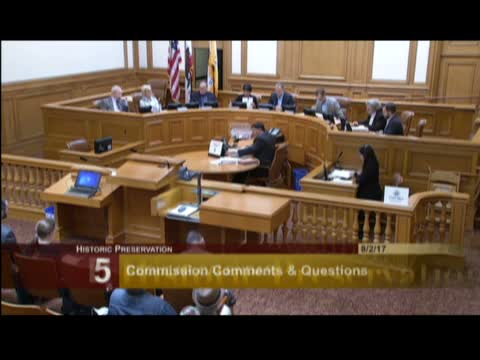
Caltrain and its consultants briefed the San Francisco Historic Preservation Commission on Aug. 2 on planned work to electrify the Peninsula Corridor and expected effects on four historic tunnels in the city.
The electrification program, the presenters said, is nearing 100 percent design and follows environmental clearances completed in 2015. “We got our last chunk of funding from the federal government of $647,000,000,” Stacy, the Caltrain principal planner, said, and Caltrain expects manufacturing, testing and a phased revenue service beginning in 2020–21 with full electrified service by the mid‑2020s.
Consultant Rich Walter (ICF) said the tunnel work will require installing overhead contact infrastructure into the tunnel ceilings and bolting support hardware into existing liners. “In the end we lose about 3% to 5% of the brick liner that’s behind the shotcrete,” he said, noting the depth of interventions would vary by location. Most portal notching would be under four inches, but at Tunnel 4 the design could require substantially more; the final design language in the EIR had indicated up to 18 inches in some places.
To reduce visual and physical impacts, project staff described minimization measures: where brick must be removed, teams will cut and preserve facing units for reuse, restore the arch profile with feathering, and relocate pole structures away from portal openings where feasible. Project designers said they have incorporated gantry‑type structures that can be sited as far as 30 feet from portals; Stacy said that 30‑foot setback is included in the current design as a mitigation commitment.
Commissioners pressed Caltrain on details: how brick coursing will be matched if arches are raised, whether portal repair will preserve historic materials, and how freight clearances will be maintained. Caltrain staff said vertical clearance calculations considered freight users and that they are coordinating with the Port, Union Pacific and other stakeholders to preserve freight operations.
The presentation was informational only; the Commission did not take action but asked staff to provide detailed drawings and contract specifications to ensure restoration work and brick reuse are treated as contract requirements and oversight items during construction.