Get Full Government Meeting Transcripts, Videos, & Alerts Forever!
Get email alerts on the Historic Preservation topic
No spam. Unsubscribe anytime.
Historic-preservation panel backs full-preservation alternative for 1500 Mission draft EIR
Summary
The Historic Preservation Commission reviewed the draft EIR for 1500 Mission Street and recommended the full‑preservation alternative, arguing it would avoid a significant and unavoidable impact to the building found eligible for the California Register of Historical Places. Commissioners urged the Planning Department to incorporate that preference in comment letters to the Planning Commission.
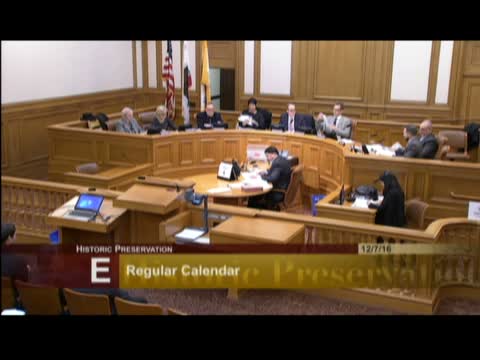
The San Francisco Historic Preservation Commission on Dec. 7 reviewed the draft environmental impact report for the 1500 Mission Street project and signaled support for the full‑preservation alternative, which staff concluded would avoid significant historic‑resource impacts.
Planning Department EIR coordinator Chelsea Fordham told the commission the project would demolish the 1997 retail building at 1580 Mission and remove roughly 90 percent of the 1925 warehouse at 1500 Mission, a structure staff determined eligible for listing in the California Register of Historical Places for its Streamline Moderne industrial architecture. The draft EIR found that the proposed project would cause a substantial adverse change to the building and therefore a project‑level significant and unavoidable impact under CEQA.
Fordham described three mitigation measures proposed in the draft EIR: Historic American Buildings Survey (HABS) level documentation with measured drawings, professional video recordation, and a permanent interpretive display about the building’s history and Coca‑Cola bottling use. The EIR also analyzed a no‑project alternative, a full‑preservation alternative, a partial‑preservation alternative and an all‑residential alternative.
San Francisco Heritage’s Mike Bueller urged the commission to back full preservation. He said the full‑preservation alternative was identified in the EIR as the environmentally superior alternative and would maintain the building’s historic eligibility; by contrast, the partial preservation option, staff explained, would retain insufficient character‑defining features and would still be a significant impact under CEQA.
Commission discussion centered on whether partial preservation retained enough of the Mission Street elevation and character‑defining elements to convey significance. Staff clarified that the full‑preservation alternative would result in a less‑than‑significant impact and would not require mitigation, while the partial preservation alternative would remain significant. Multiple commissioners said the city should model strong preservation for a project that will house civic functions and recommended that the Planning Department consider the full‑preservation alternative in its response to the draft EIR.
Next steps: commissioners instructed staff to draft a comment letter to the Planning Department and the environmental review officer that (a) concurs with the Architectural Resources Group finding that the proposed project, as presented, does not meet Secretary of the Interior Standards; (b) concurs that the full‑preservation alternative would meet standards and avoid significant impacts; and (c) affirms that the range of alternatives studied in the draft EIR is appropriate. The Planning Commission is scheduled to hold a public hearing on the draft EIR on Dec. 15, and written comments must be filed with the environmental review officer by 5 p.m. on Jan. 4, 2017.