Get Full Government Meeting Transcripts, Videos, & Alerts Forever!
Get email alerts on the Interpretive Display topic
No spam. Unsubscribe anytime.
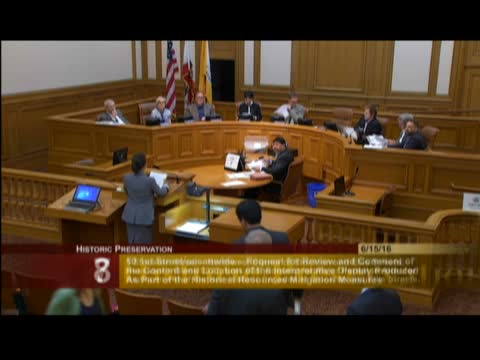
Commission reviews Oceanwide Center interpretive display, asks for more content and a second hearing
Summary
The commission reviewed an interpretive-display proposal for the Oceanwide Center mitigation program at 50 First Street, urged expanded content, stronger wayfinding and protection of artifacts, and adopted a resolution incorporating comments while requesting a second hearing before final approval.
Department staff presented the Oceanwide Center interpretive-display program on June 15 as mitigation for demolition and rehabilitation work at First Street, noting required measures such as HABS documentation, salvage of historic components, and an interactive exhibit proposed inside a 68-foot-tall "urban room." Marcel Boudreaux said the interpretive display would be located within a pedestrian passage that allows public dissemination of the site’s history and recommended the commission provide review and comment and direct staff and sponsor to finalize the program with staff approval.
Morgan Fleming, partner at Foster & Partners (representing Oceanwide and project consultants), described three display elements: a panel focused on 62 First Street (Neustadter Building), a panel on 78 First Street (Marwedel Building), and a central interactive panel with photographs, text and artifacts (e.g., a pair of overalls). Fleming said the urban room is a semi-protected outdoor space within the First Street tower, sited to draw pedestrians into the public open space.
Commissioners raised multiple concerns: several said the proposed panels felt minimal and urged more substantive content for the interactive center panel; others proposed stronger wayfinding and vertical markers so passersby would notice the exhibit; commissioners pressed for assurances the exhibit would be protected from sun and degradation, and asked that the commission retain an opportunity to review final content rather than delegate final sign-off to staff. Page & Turnbull architectural historian Christina Dicus said the packet included proposed center-panel text and that staff would be able to supplement images from the San Francisco Public Library and HABS resources.
After extended discussion about mitigation requirements and the adequacy of panel content, commissioners amended the draft resolution to incorporate their findings and to request a second hearing for final approval of the interpretive display, striking language that would have given final approval authority to staff alone. The commission voted unanimously to adopt the amended resolution, and project representatives said they will return with revised materials and requested timeline estimates for final review.