Get Full Government Meeting Transcripts, Videos, & Alerts Forever!
Get email alerts on the Streamlining Bill topic
No spam. Unsubscribe anytime.
San Francisco planners warn state 'streamlining' bill could limit historic reviews for qualifying housing projects
Summary
Planning staff told the Historic Preservation Commission that the governor's draft streamlining legislation would make many multi‑unit residential projects ministerial ('as of right') if they meet objective standards and affordability thresholds, potentially removing CEQA review and complicating protections for local historic resources.
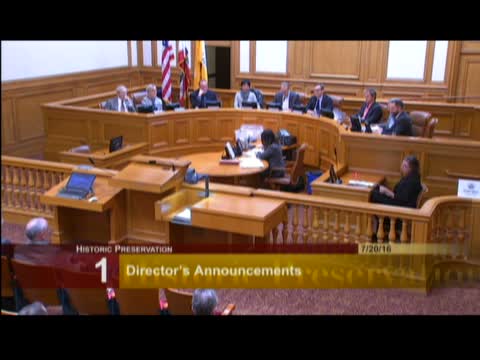
Planning department staff warned Historic Preservation Commissioners on July 20 that a state bill designed to speed housing approvals could sharply limit local review of projects that affect historic resources.
"The governor's proposal would allow — would require us to approve projects without extensive review as of right," said John Ram, introducing the briefing. Anne Marie Rogers, planning department staff, said the draft bill generally would make housing projects of two or more units that meet objective standards ministerial and therefore not subject to CEQA for qualifying sites.
Rogers described how eligibility would depend on objective standards and affordability levels tied to transit proximity: in transit priority areas a project would need at least 10 percent low‑income or 5 percent very‑low‑income units to qualify, while more remote areas would require higher affordability (for example, roughly 20 percent at 80 percent AMI). Rogers said replacement of existing rent‑controlled or income‑restricted units and relocation payments to displaced tenants remain required under state law.
"If a project is non‑discretionary then CEQA does not apply," Rogers said. That, she added, raises immediate questions about how protections embedded in CEQA — including those for historic resources — would be preserved if projects meet the bill's ministerial criteria.
Kate Connor, planning department staff, ran through examples to illustrate which projects might use the fast‑track process and which likely would not. She said projects that require variances or other exceptions — common in the city's entitlement pipeline — would generally be ineligible for streamlining, while projects that are fully code‑compliant and provide on‑site affordable units could be eligible.
Connor cautioned that the bill's language is still evolving and that specific interactions with local protections are unclear: "The new version of the bill says that streamlining cannot be used on sites that are national historic or state listed resources," she said, "but it's unclear how our local resources, locally landmarked buildings in Article 10 and the Downtown Conservation District in Article 11, would apply."
Commissioners pressed staff on technical interactions: whether demolition would be permitted without CEQA for qualifying projects (staff said yes under ministerial approval) and whether on‑site BMR units could be rental units without a Costa‑Hawkins workaround (staff said the current draft makes that difficult unless a separate legislative fix — the so‑called "Palmer fix" — is adopted). Staff said they are coordinating with the State Historic Preservation Office and the Department of Housing and Community Development for clarifications.
The briefing was informational; no formal action was taken. Rogers and Connor told commissioners that the department will continue to track legislative changes and will return with updates if the bill advances.
What happens next: the department will monitor the bill's revisions and coordinate with city legal counsel and SHPO to identify whether and how local landmark protections can be preserved through objective standards or other legal mechanisms.