Get Full Government Meeting Transcripts, Videos, & Alerts Forever!
Get email alerts on the Public Art topic
No spam. Unsubscribe anytime.
Student-designed public art project continued to July 20 after presentation
Summary
A student-led design for the Art Lit Living Innovation Zone near the Asian Art Museum drew praise and questions about cultural outreach and maintenance; the Historic Preservation Commission continued the item to its July 20 hearing and will consider placing it on the consent calendar.
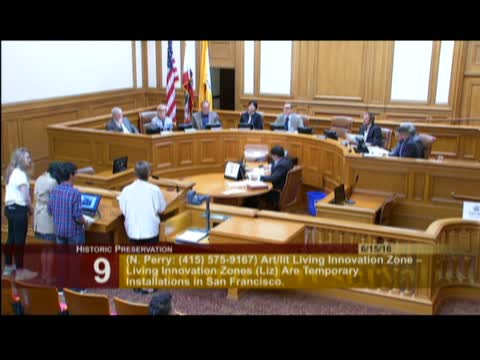
Cassie Hopridge, the project manager, presented the Art Lit Living Innovation Zone on June 15, describing a dragon-shaped installation sited on Fulton Street adjacent to the Asian Art Museum. The project is a design-build by Youth Art Exchange, a nonprofit offering after-school programs for San Francisco public high school students; Hopridge said the team has coordinated ADA compliance, drafted a maintenance plan that will require sign-off from the Department of Public Works and SFPD, and expects to finalize details with community stakeholders and the Arts Commission.
Student presenters described the installation’s concept and interactive features: Violina said the form takes a dragon motif to represent many Asian cultures; Christopher Lam described origami-inspired elements and an art gallery built into the dragon’s body; Gwyneth explained telescopes that will allow viewing into the Asian Art Museum and the public library; Isabelle Scanlon said the team conducted community outreach— including a "wishing tree" event—and plans rotating exhibits programmed with local groups.
Commissioners praised the students and the idea but asked whether outreach specifically engaged Asian community organizations because the dragon imagery draws on pan-Asian symbolism. Project staff said they had not worked with an explicit Asian cultural organization but had engaged neighborhood groups such as the Wildflower Interagency group and would add targeted outreach. Commissioners also encouraged clearer maintenance/security plans and encouraged using wayfinding or vertical markers to ensure the installation is visible to passersby.
With no public speakers, a commissioner moved to continue the item to July 20 and place it on the next consent calendar; the motion carried unanimously, 6–0. The project team said it will refine ADA and maintenance details and incorporate commission comments before returning.