Get Full Government Meeting Transcripts, Videos, & Alerts Forever!
Get email alerts on the Showplace Square Eir topic
No spam. Unsubscribe anytime.
Historic Preservation Commission urges Planning Commission to reassess massing and preservation alternatives for Showplace Square project
Summary
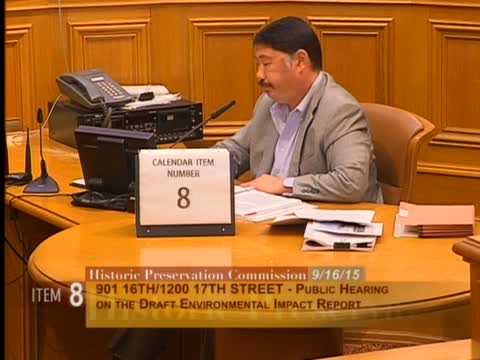
The Historic Preservation Commission voted unanimously to send a comment letter on the draft EIR for 901 Sixteenth/1200 Seventeenth (Showplace Square/Potrero Hill), saying the project could impact an eligible brick office historic resource and asking that the Planning Commission re-examine scale, massing and preservation-inspired alternatives including the metal-shed reuse concept.
The San Francisco Historic Preservation Commission on Sept. 16 recommended that the Planning Commission re-examine the draft environmental impact report for a proposed mixed‑use project at 901 Sixteenth Street and 1200 Seventeenth Street, saying the development as presented may adversely affect a brick office building the city has identified as an eligible historic resource.
Planning Department staff (Chris Thomas and Gretchen Hilliard) told the commission the draft EIR concludes that the brick office building on the site can be retained and rehabilitated, and that the project would therefore have no project‑specific or cumulative impacts on historic resources under the Secretary of the Interior’s rehabilitation standards. The draft EIR analyzed three alternatives: no project, reduced density and a “metal‑shed reuse” alternative that would retain and adapt the site’s corrugated metal warehouses for artist work space, retail and cafes.
Why it matters: Neighbors and preservation advocates said the department and consultants undercounted the historic significance of the site’s metal warehouses and argued adaptive reuse would preserve neighborhood character while meeting housing and employment goals. Several speakers cited research by preservation consultant Catherine Petren and urged a longer period of significance for the Pacific Rolling Mill complex.
Public speakers pressed the case for reuse. Rob Minot of Save the Hill said research demonstrates the metal buildings “retain historic integrity despite alterations” and urged that the metal‑shed reuse alternative be strengthened. Peter Linenthal, director of the Potrero Hill Archive Project, added that the sheds are among the last remaining structures tied to the Pacific Rolling Mill and “deserve to be preserved.”
Commission discussion focused on two related questions: whether the commission should reopen earlier determinations that only the brick office retained sufficient integrity, and whether the preferred project alternative overwhelms the small historic building by scale and massing. Commissioner Johns cautioned the commission’s authority is limited by prior findings but said the massing of new construction could nonetheless diminish the brick building’s ability to convey significance. Commissioner Pearlman and others urged staff to press the planning commission for design adjustments that would reduce visual overwhelm at street level.
Action taken: By unanimous vote, the Historic Preservation Commission instructed staff to prepare a comment letter for the Planning Commission that (1) states the HPC believes there are potential impacts to the site’s historic resource under Secretary of the Interior Standard 9 (scale and massing) that warrant further evaluation, (2) asks that the preferred alternative be restudied to incorporate concepts from the metal‑shed reuse alternative where feasible, and (3) requests that the Planning Commission refer the project design to the Architecture Review Committee (ARC) or otherwise seek design review input prior to final approvals.
What’s next: The Planning Commission’s public hearing on the draft EIR was scheduled for Sept. 17; written comments were due to the Planning Department’s environmental review officer by Sept. 28. The HPC’s comments will be submitted as part of that review record.