Get Full Government Meeting Transcripts, Videos, & Alerts Forever!
Get email alerts on the Civic Center Inventory topic
No spam. Unsubscribe anytime.
Commission delays adoption of Civic Center cultural landscape inventory after factual concerns
Summary
After staff presented a Civic Center Cultural Landscape Inventory, commissioners and public commenters raised factual inaccuracies and asked for clarifications; the Commission voted to continue the item to Oct. 15 for staff to report back on edits and options.
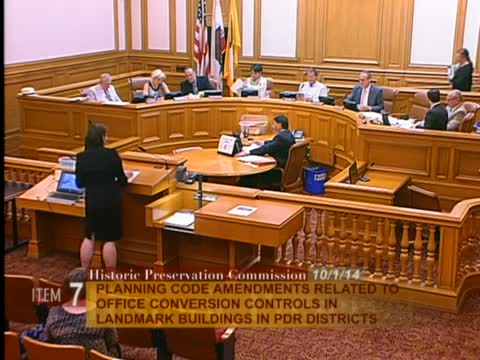
The Historic Preservation Commission heard a presentation Oct. 1 on the Civic Center Cultural Landscape Inventory (CLI), a 15-block survey intended to document landscape features that contribute to the Civic Center landmark district. Gretchen Hilliard, department staff, summarized the inventory’s scope, consultants and findings and recommended adopting the inventory’s findings as a planning tool. The inventory was prepared by MIG Inc. with assistance from local historians and funded in part by an EPA grant.
Several commissioners and members of the public raised concerns about factual errors in the historic narrative and requested more explicit analysis of integrity for contributing features such as Fulton Mall, UN Plaza and selected light standards. Jim Haas, a frequent volunteer reviewer, told the Commission he found “egregious errors” in the background history and urged the Commission to hold the matter open for further corrections. Hilliard and Tim Frey said staff would incorporate factual edits that could be verified and recommended different approaches — removing the narrative, footnoting questionable material, or splitting the inventory from the interpretive narrative.
Commissioner Johns moved to continue the CLI to allow staff to return with a plan and a schedule; the motion to continue to Oct. 15 passed unanimously. Staff estimated a set of basic edits could be completed by December, while deeper primary-source research could take longer.