Get Full Government Meeting Transcripts, Videos, & Alerts Forever!
Get email alerts on the Economic Development topic
No spam. Unsubscribe anytime.
Planning department outlines threats and next steps for PDR policy; commission asks for more analysis
Summary
Planning staff briefed the commission on Production, Distribution and Repair (PDR) uses, noting San Francisco’s long-term decline in industrial jobs, the current footprint and clusters, risks from conversions to office, and potential legislation to protect PDR uses in landmark buildings. Commissioners asked staff for hard numbers and for the preservation element to integrate PDR concerns.
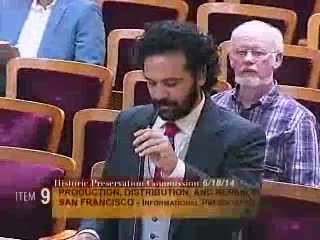
City planning staff delivered an informational briefing on June 18 about Production, Distribution and Repair (PDR) uses and the department’s work to support and protect industrial employment in San Francisco.
Steve Wertheim (Planning Department) told the Historic Preservation Commission that PDR remains essential for the city’s economy — supplying services that cannot be offshored — but that the sector has declined over decades. “Today we have about 63,000 PDR jobs — about 10 percent of the city’s workers,” he said, and described clusters in South of Market, Northeast Mission/Showplace, the waterfront and the Bayview. He said PDR jobs can pay about twice as much as retail jobs and that a third of PDR uses are in residential areas or unprotected zoning districts, making them vulnerable to displacement in a high-rent market.
Wertheim described actions planning has taken: zoning protections in industrial districts, closing loopholes that allowed conversions, incentives for new industrial space, reduced fees for PDR uses, and work with SFMADE and the Office of Economic and Workforce Development. He said the department is working with Supervisor Cohen’s office on potential legislation to limit office conversion in some landmark buildings and to better incentivize PDR in historic properties.
Commissioners pressed for more concrete numbers and policy language. They asked staff to estimate how much landmark-eligible square footage might be convertible to office under current code provisions and requested a follow-up analysis to quantify the potential loss of PDR space. Several commissioners suggested that the preservation element review is an appropriate place to frame long-term policy responses and to coordinate with planning on rezoning and incentives.
Wertheim recommended a regional study with the Metropolitan Transportation Commission to better understand goods‑movement patterns and industrial lands at a Bay Area scale; commissioners and staff agreed more detailed local data and a cross-agency legislative approach will be needed before specific code changes are proposed.
No formal action was required; the briefing was informational and staff committed to follow up with more detailed analysis and to bring potential legislative language to the commission as it is developed.