Get Full Government Meeting Transcripts, Videos, & Alerts Forever!
Get email alerts on the Design Guidelines topic
No spam. Unsubscribe anytime.
Commission launches year‑long local interpretations of the Secretary of the Interior Standards
Summary
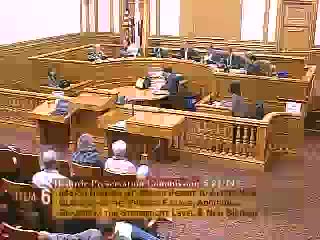
The commission began a year‑long process on May 21 to develop San Francisco‑specific design guidelines interpreting the Secretary of the Interior Standards. Presenter Vince Michael emphasized preservation as a process and commissioners and the public discussed balancing integrity, context, energy goals and homeowner burdens.
The San Francisco Historic Preservation Commission opened a workshop on May 21 to begin developing local interpretations of the Secretary of the Interior Standards, a year‑long process required by Articles 10 and 11 of the planning code. The session featured a presentation by Vince Michael, executive director of the Global Heritage Fund, and drew public comment on false historicism, homeowner burdens and tools such as transfer of development rights.
Tim Frey of department staff introduced the item and said staff would return in the fall with a public participation plan and a schedule for the guidelines. Supervisor Wiener, who arrived from a Budget Committee meeting, welcomed the effort and said the city needs “really strong and robust historic preservation in our city, and while also acknowledging that we are a living, urban, center with a lot of needs around housing and parks.”
Vince Michael framed preservation as a process of identification, evaluation, registration and treatment rather than a fixed set of visual rules. “Preservation is not embodied in a set of standards, but in a process,” he told commissioners, and walked through the 10 standards, emphasizing tensions between Standard 3 (avoid creating a false sense of historic development) and Standard 9 (require new work to be compatible yet differentiated). Michael showed examples of sensitive infill, facadeism and reversible work and urged district‑specific context statements to guide treatment.
Public speakers raised recurring themes: Desiree Smith of San Francisco Heritage announced a June 7 community meeting on the San Francisco Latino historic context statement; Raymond Zablotny of the Victorian Alliance urged careful contextual interpretation to avoid losing neighborhood character; Dennis Antinori and others asked how the Standards apply to interiors and to the history of events that occurred in a building; and several homeowners said complex documentation and strict review can discourage small owners from restoring properties. Advocates and commissioners discussed transfer of development rights (TDRs) as a tool to save lower‑rise industrial buildings under development pressure.
Commissioners and staff emphasized the need for guidelines that are specific to different contexts — residential, industrial and commercial — and that the Standards themselves do not regulate style but provide a framework (mass, scale, rhythm, setbacks and materials) that a local guideline should interpret. Tim Frey said staff will publish materials and set up a website for public input; the department committed to return in early fall with a schedule and public participation plan.
The commission agreed to continue the workshop series over the coming year and encouraged broad public participation to develop guidelines tailored to San Francisco’s varied historic contexts.